Menu
NETSUKE – Manju, Hoteï et Karako


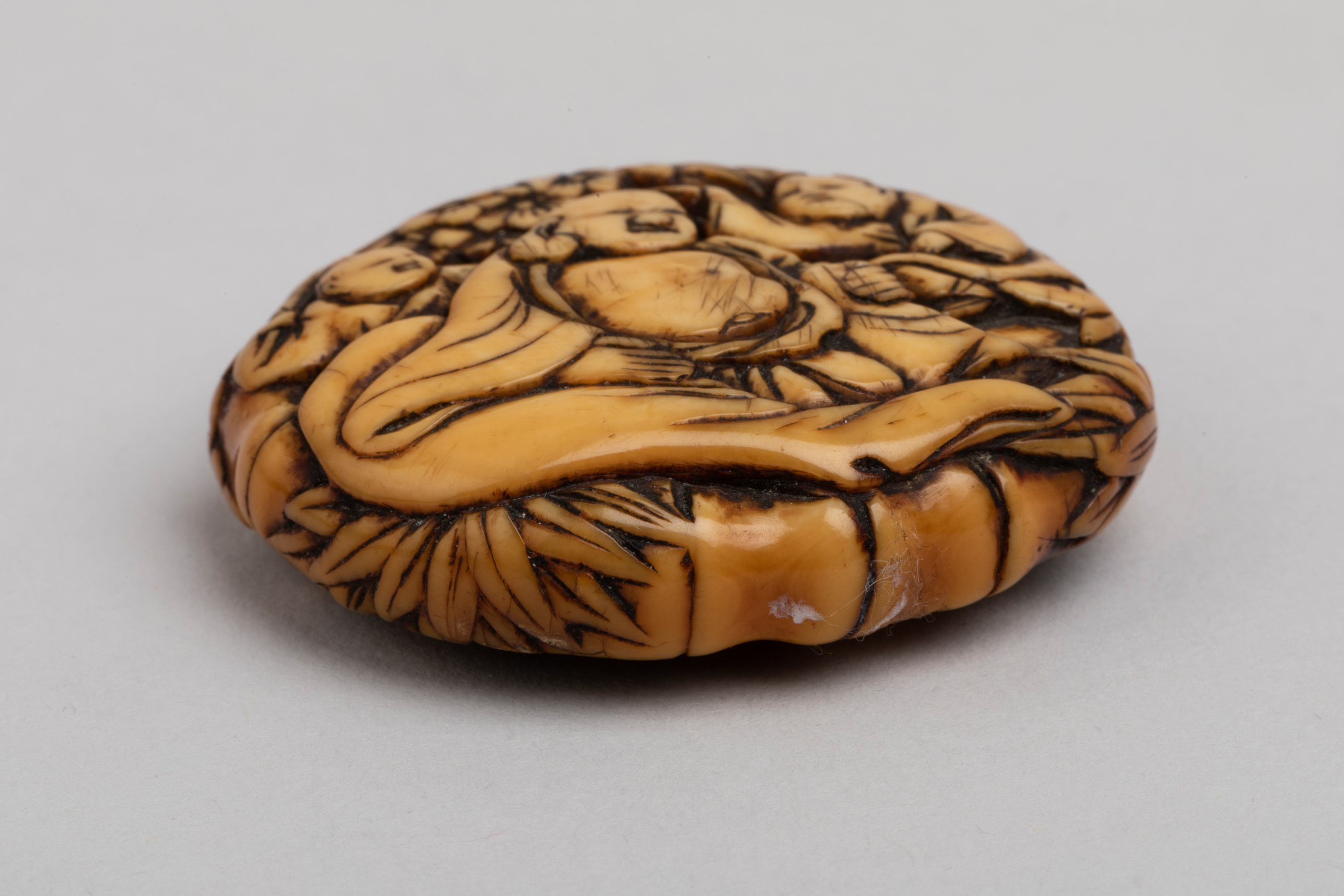
Netsuke – Intéressant Ruysa Manju en ivoire sculpté représentant Hoteï assis au milieu d’un jardin de bambous et d’arbres en fleurs, entouré de Karako jouant. Japon Edo (1603-1868) début du XIXe siècle. Diamètre : 5 cm
Netsuke – Interesting model of an ivory Ryusa Manju showing Hoteï with Karako playing. Japan Edo (1603-1868) Early 19th century. Diameter : 5 cm
TSUBA – Médaillons fleurs et feuillages


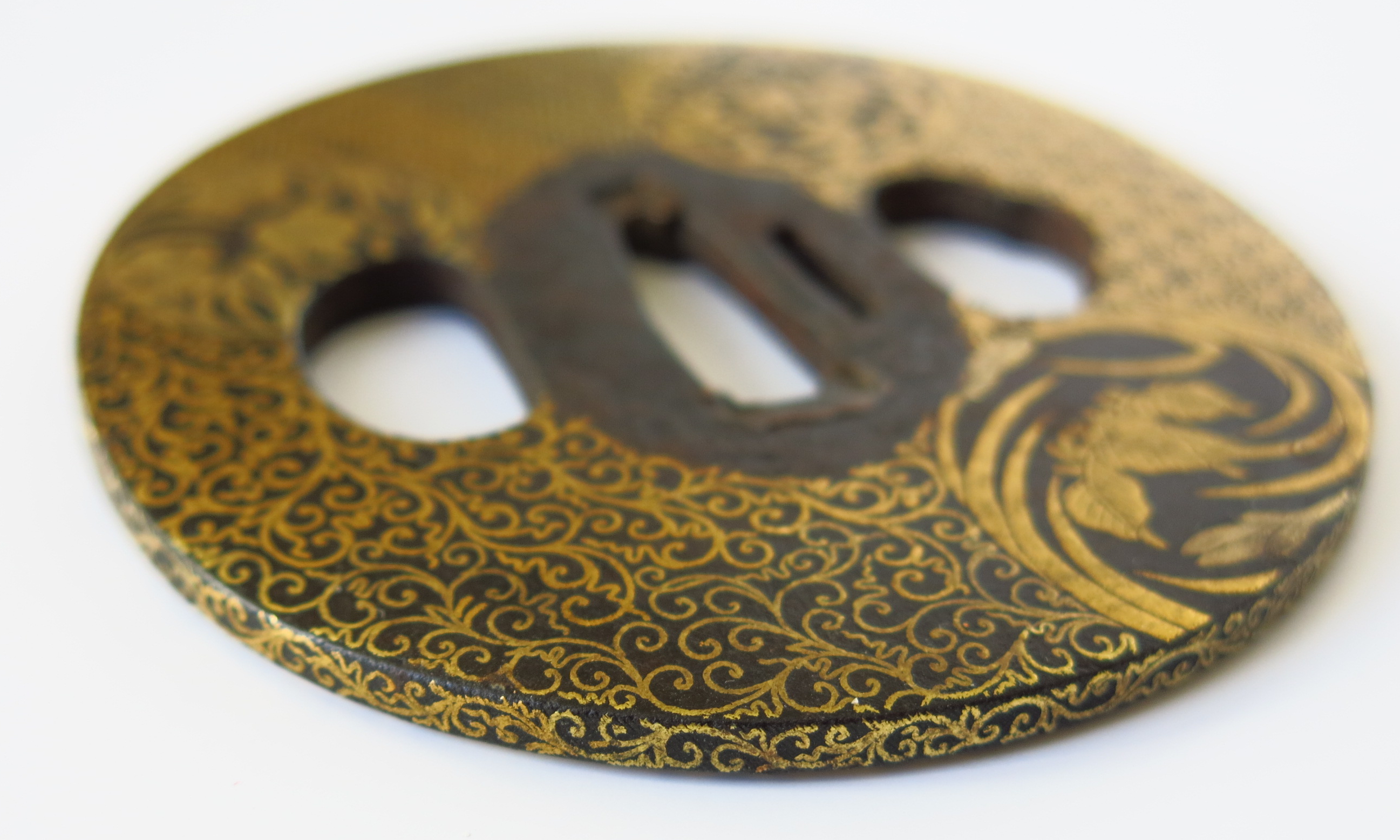


TSUBA en fer, à décor incrusté de cuivre doré, représentant des médaillons de fleurs et feuillages stylisés formant môns, sur un fond en alternance de motifs de rinceaux et géométriques se poursuivant sur la tranche. Diamètre : 7 cm. Japon Edo (1603-1868) XVIIIe siècle.
TSUBA – Gold flowers, and foliage medallions on a geometric patterns and gold foliages inlaid. Diameter : 7 cm. Japan, Edo (1603-1868) 18th century
OJIME en or


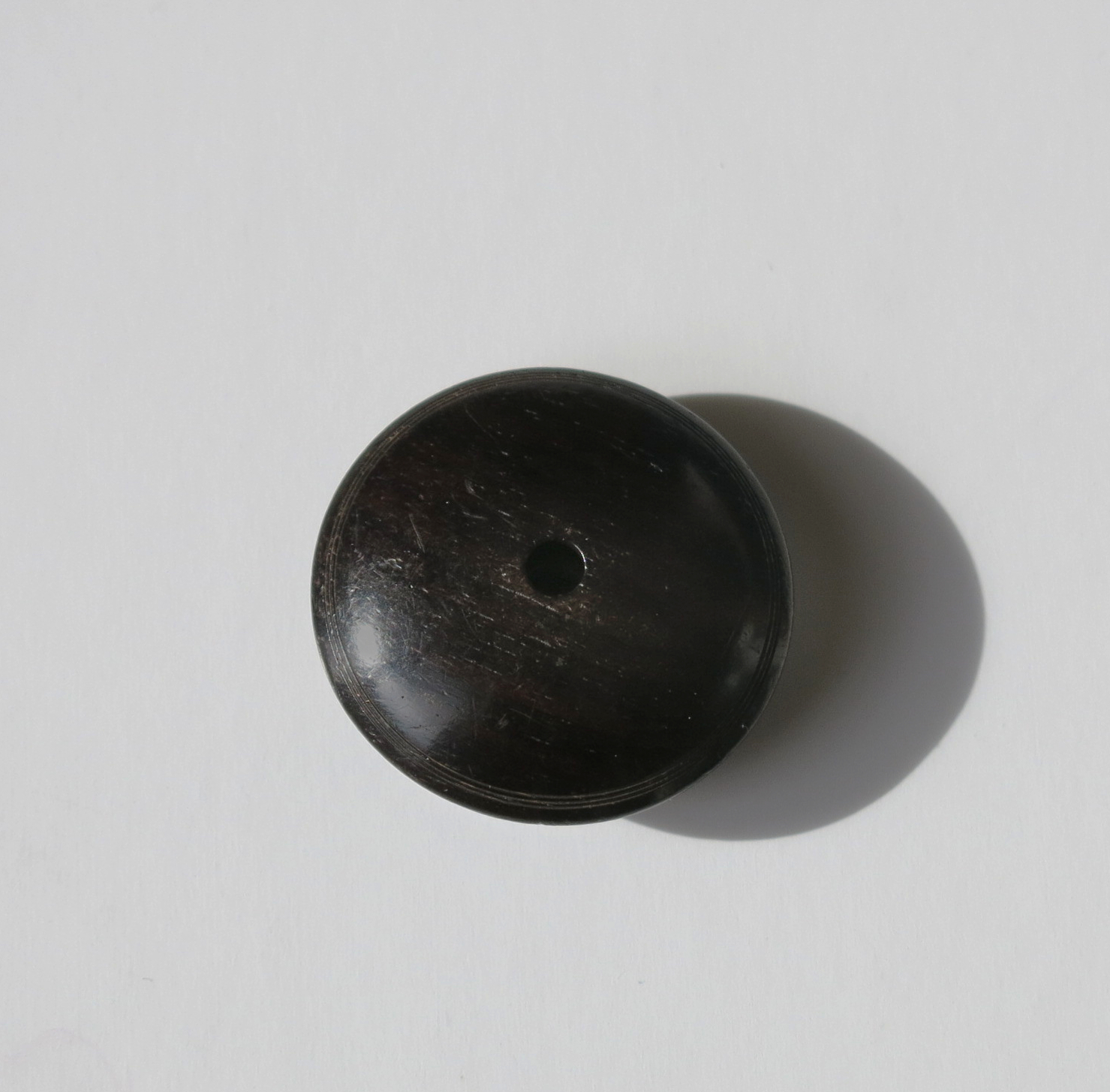
OJIME en or. Rare et ravissant modèle reprenant des motifs de fleurs et feuillages en rinceaux – Karakusa. Hauteur : 1,3 cm. Japon Edo (1603-1868).
OJIME – Gold ojime with flowers and foliages – Karakusa. Heigth : 1,3 cm. Japan Edo (1603-1868).
NETSUKE – Kagamibuta, petit rat et navet par Mitsuhiro


NETSUKE – Ravissant petit Kagamibuta en corne de cerf et plaque en Shibuichi avec inclusion d’or, représentant un rat prés d’un gros radis / navet – dans laquelle on peut voir une représentation symbolique de Daïkoku. Signé : Mitsuhiro. 3.3 cm. Très joli travail de sculpture. Japon Edo (1603-1868) XIXe siècle
NETSUKE – A lovely small Kagamibuta. Stag horn with Shibuichi and gold of a small rat a radish / turnip. Signed : Mitsuhiro. 3.3 cm. Well carved. Japan Edo (1603-1868) 19th century.
NETSUKE – Coquillage en laque


Netsuke – Coquillage en bois laqué représenté entrouvert, offrant une scène de palais sculptée, reprenant le conte du château dans les airs. Japon Edo (1603-1868) XIXe siècle.
Netsuke – Wood and lacquer of a shell depicting a palace scene of the famous japanese legend. Japan Edo (1603-1868) 19th century
NETSUKE – Shishi en laque


NETSUKE – Intéressant petit modèle de Shishi en laque cinabre sculptée, représentée couché, gravé de fines bouclettes. Longueur : 3,5 cm. Japon Meiji (1868-1912) Fin du XIXe siècle, vers 1880. Provenance : ancienne collection Kress.
NETSUKE – Intersting small model of a Shishi crouching. Carved lacquer. Length : 3,5 cm. Japan Meiji (1868-1912) End of 19th century. Circa 1880. Provenance : From the Kress collection.
Prix sur demande – Price on request
NETSUKE – Kagamibuta, fleurs de prunier


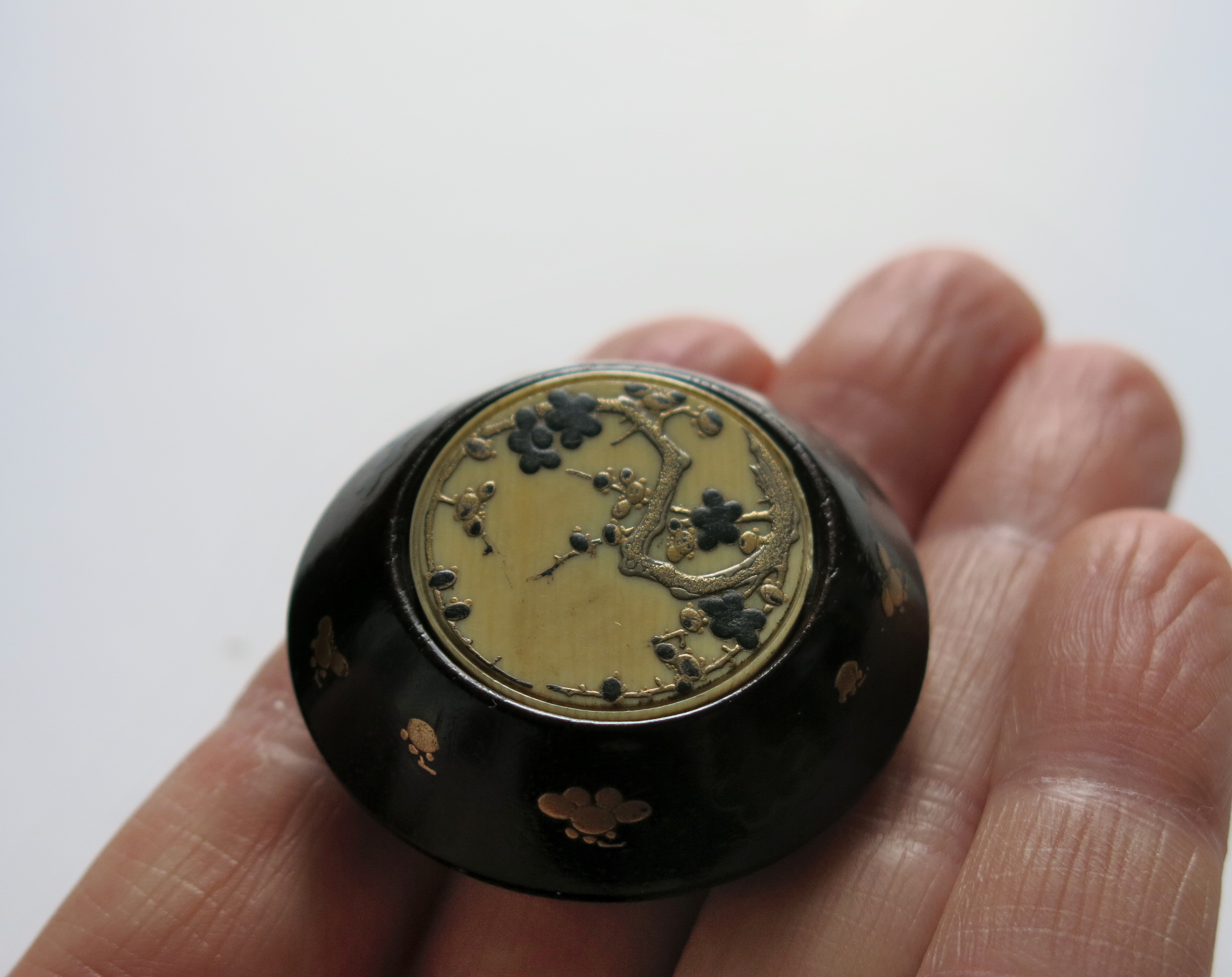
NETSUKE – Joli Kagamibuta en bois et ivoire, offrant un ravissant décor en laque d’or de prunier en fleurs. Diamètre : 3,7 cm. Japon Edo (1603-1868) Fin du XVIIIe siècle
NETSUKE – A delicate model of a Kagamibuta with wood and ivory. Fine japanese urushi gold lacquer of plum blossom, and flowers. Diameter : 3,7 cm. Japan Edo (1603-1868) End of 18th century
N’est plus disponible – Is no longer available
NETSUKE – Obi-hasami, champignons Reishi


NETSUKE – de type Obi-hasami, en corne de cerf, représentant des champignons d’immortalité Reishi. Utilisés par les médecines traditionnelles chinoises et japonaises, le motif du champignon d’immortalité est apprécié également pour ses qualités esthétiques, comme ornement, en Chine comme au Japon. Japon Edo (1603-1868) 19e siècle.
NETSUKE – Stag antler obi-hasami of reishi fungus. Reishi fungus of immortality, used by traditional Chinese and Japanese medicines, and represented as an ornamental design. Japan Edo (1603-1868) 19th century.
ESTAMPE par Tsuchiya KOITSU, Miyajima sous la pluie.


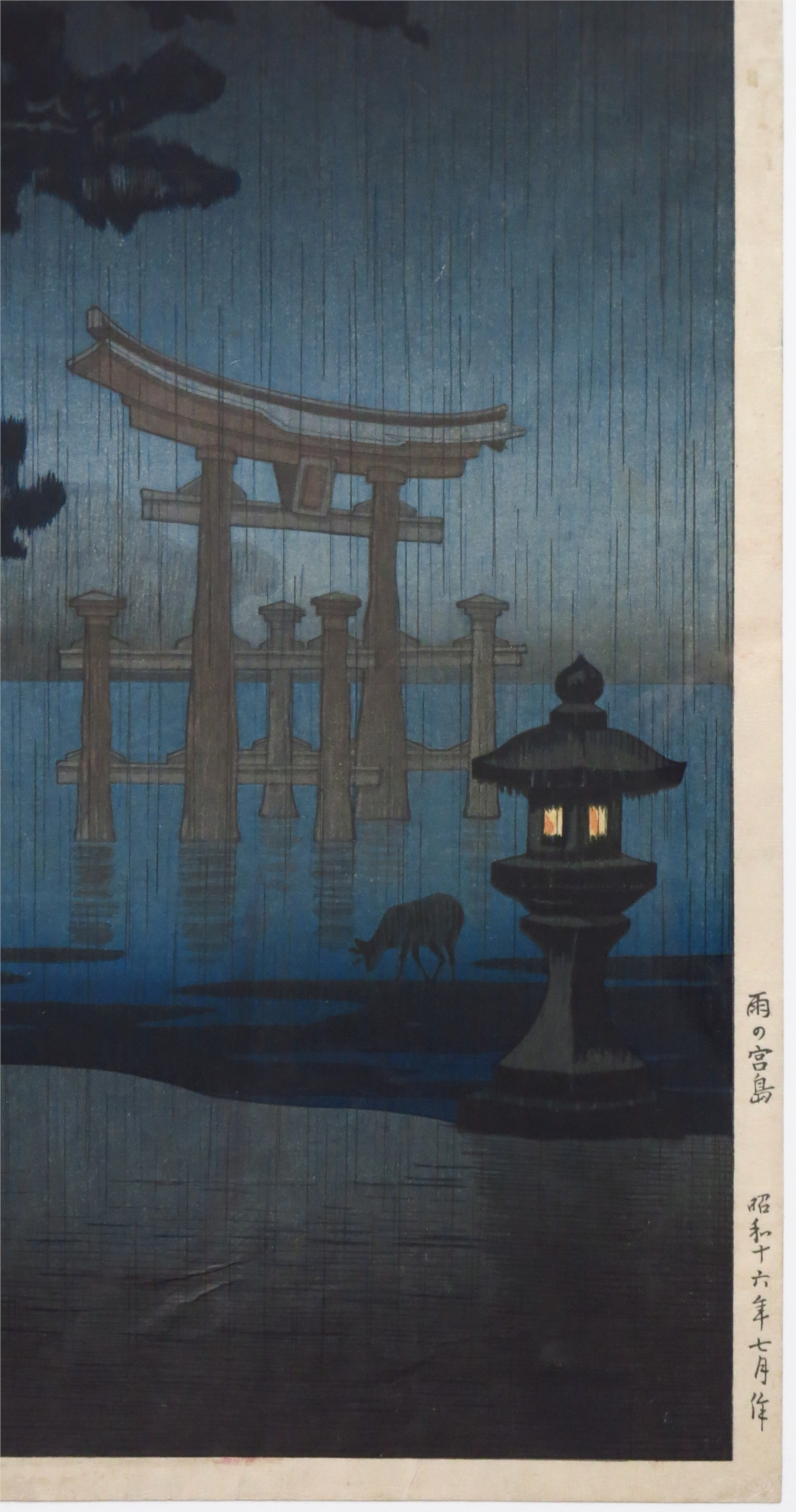


Tsuchiya KOITSU (1870-1849) Miyajima sous la pluie. Gravure sur bois en couleurs. Impression sur papier Japon, signée en bas à gauche, éditée par Doi Eiichi (dans la marge gauche) probablement dans les années 1950 – 1960. Dimensions du feuillet: format ô-ôban (42 cm x 28,5 cm) Une légère tache violette au dos en bas de l’estampe.
Tsuchiya KOITSU (1870-1849) Miyajima in the rain. Woodblock print. Print on Japanese paper, signed on the left, edited by Doi Eiichi (in the left margin) probably in the 1950s – 1960s. Dimensions of the sheet: ô-ôban format (42 cm x 28.5 cm) A light purple mark in the back, center of the print.
ESTAMPE par HIROSHIGE Ando, Série de la route du Tokaido

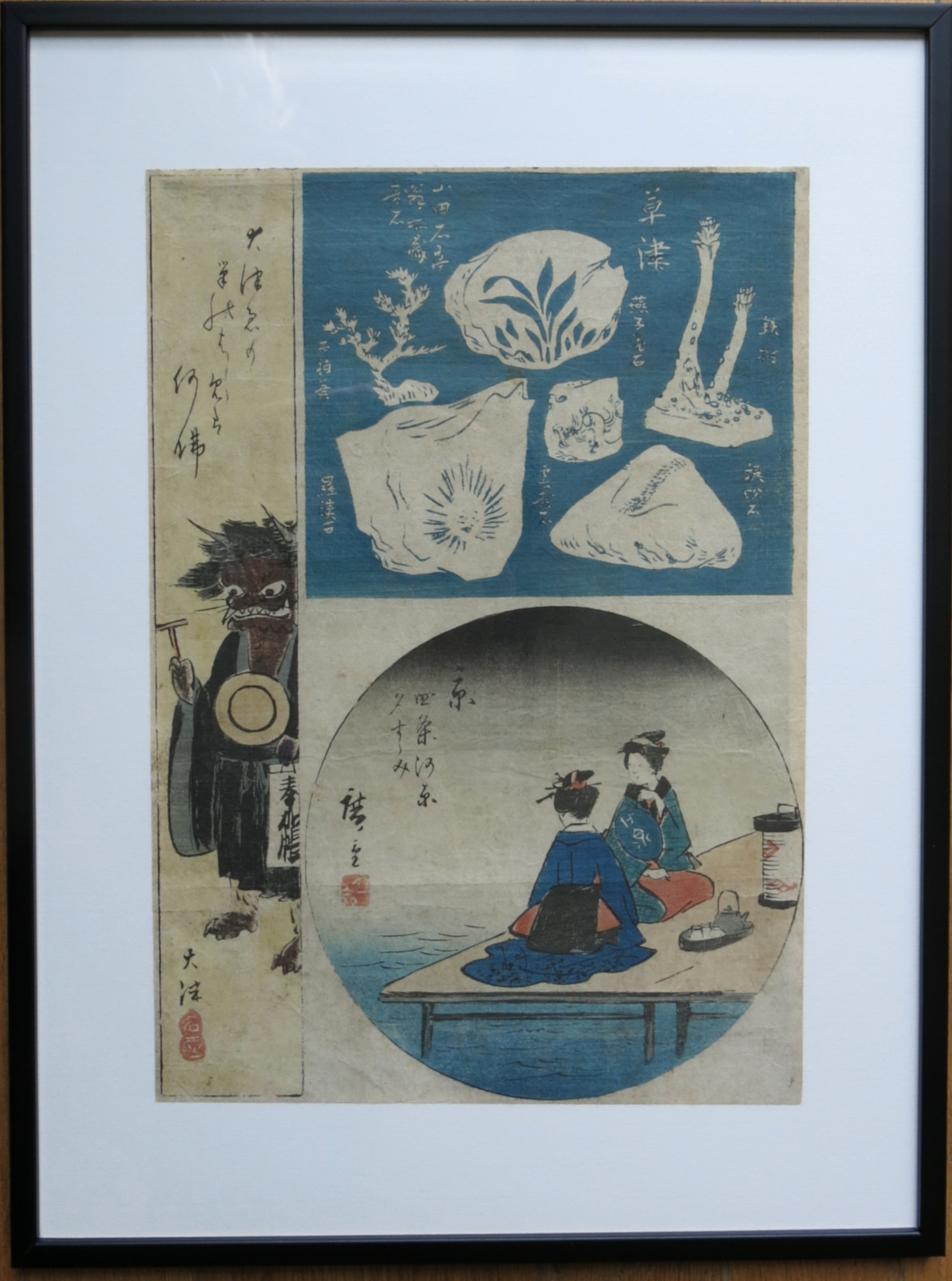


HIROSHIGE Ando (1797 – 1858) Bois original en couleurs. Otsu meisan, Kusatsu, Kyoto Shijo-Kawara yu-suzum. Planche n°14 de la série des cinquante-trois stations de la route du Tokaido – Gojusan tsugi harimaze. Impression en couleurs (nishiki-e) Impression signé par Hiroshige et daté 1852. Format ôban Dimensions : 35,5 cm x 24,5 cm. Japon Edo (1603-1868) XIXe siècle
HIROSHIGE Ando (1797 – 1858) Otsu meisan, Kusatsu, Kyoto Shijo-Kawara yu-suzum. Sheet n° 14 from the series Cutouts of the Fifty-three Stations of the Tokaido road woodcut in colours (nishiki-e) A Hiroshige signed impression. Sheet: ôban. Size : 35,5 cm x 24,5 cm. Japan Edo (1603-1868) 19th century.
ESTAMPE par Utagawa Toyokuni, Nuit pluvieuse d’Hakakigi


Utagawa Toyokuni (1769-1825) Nuit pluvieuse d’Hakakigi de la série le dit du Genji. Gavure sur bois original en couleurs. Dimensions : 25 cm x 19 cm. Japon Edo (1603-1868) XVIIIe siècle
Utagawa Toyokuni (1769-1825) Rainy night in Hakakigi of the serie Le dit du Genji. Woodblock print. Size : 25 cm x 19 cm. Japan Edo (1603-1868) 18th century.


OJIME – Rat en métal


OJIME – Joli modèle en métal représentant un rat assis, le museau relevé, la queue remontant sur son dos, sur un petit socle. Japon Meiji (1868-1912)
OJIME – Very fine model on metal of a rat, seating, his head raised, its long tail passing over his back on a stand. Japan Meiji (1868-1912)
Prix sur demande – Price on request
NETSUKE – Rat sur une petite balayette


NETSUKE – Charmant et amusant modèle en ivoire d’un petit rat représenté sur une petite balayette. Incrustation de corne brune pour les yeux. Larges himotoshi. Jolie couleur naturelle et belle patine. Japon Edo (1603-1868) XVIIIe siècle
NETSUKE – A lovely and amusing small rat climbing on a brush. Detail well carved. Black horn inlaid. Nice colour and beautiful patina. Japan Edo (1603-1868) 18th century
NETSUKE – Sagemono avec poche à tabac


NETSUKE -Rare modèle en ivoire sculpté et Shibuishi représentant un Sagemono formé par une pochette à tabac en cuir, fermant par un petit Menuki d’un tigre en Shakudo. Signé au dos : Josetsu. Japon Edo (1603-1868) XIXth siècle
NETSUKE – A model of a leather pouch, the rough leather naturalistically carved and with two small as a fastening, signed Josetsu. Japan Edo (1603-1868) Early 19th century.
Prix sur demande – Price on request
NETSUKE – Daim couché en ivoire


NETSUKE – Charmant modèle ancien, représentant un daim couché, se reposant lové sur lui-même. Très belle patine naturelle. Larges himotoshi. Japon Edo (1603-1868) XVIIIe siècle
NETSUKE – A charming model of a sleeping stag, curled up to the right with antlers laid back for compactness and forming a fine representation of repose. Large himotoshi. Good patina. Japan Edo (1603-1868) 18th century.
Prix sur demande – Price on request
NETSUKE – Rongeur sortant d’un champignon


NETSUKE – En ivoire finement sculpté, représentant un charmant petit rongeur formant un gros trou en sortant d’un champignon. Celui-ci laisse apparaître sa petite patte et sa large queue sous la base. Les yeux sont incrustés. Belle patine naturelle. L : 5 cm. Japon Edo (1603-1868) fin du XVIIIe, tout début du XIXe siècle.
NETSUKE – A very fine and unusual ivory carved modele of a little squirrel on a mushroom. The creature, his eyes inlaid, shown crawling throught a large gnawed hole in the mushroom to see on the back his long and bushy tail and his small paw. L : 1.9 In. Japan Edo (1603-1868) end of 18th century, early 19th century.
SUZURIBAKO – Paysage de pin et croissant de lune


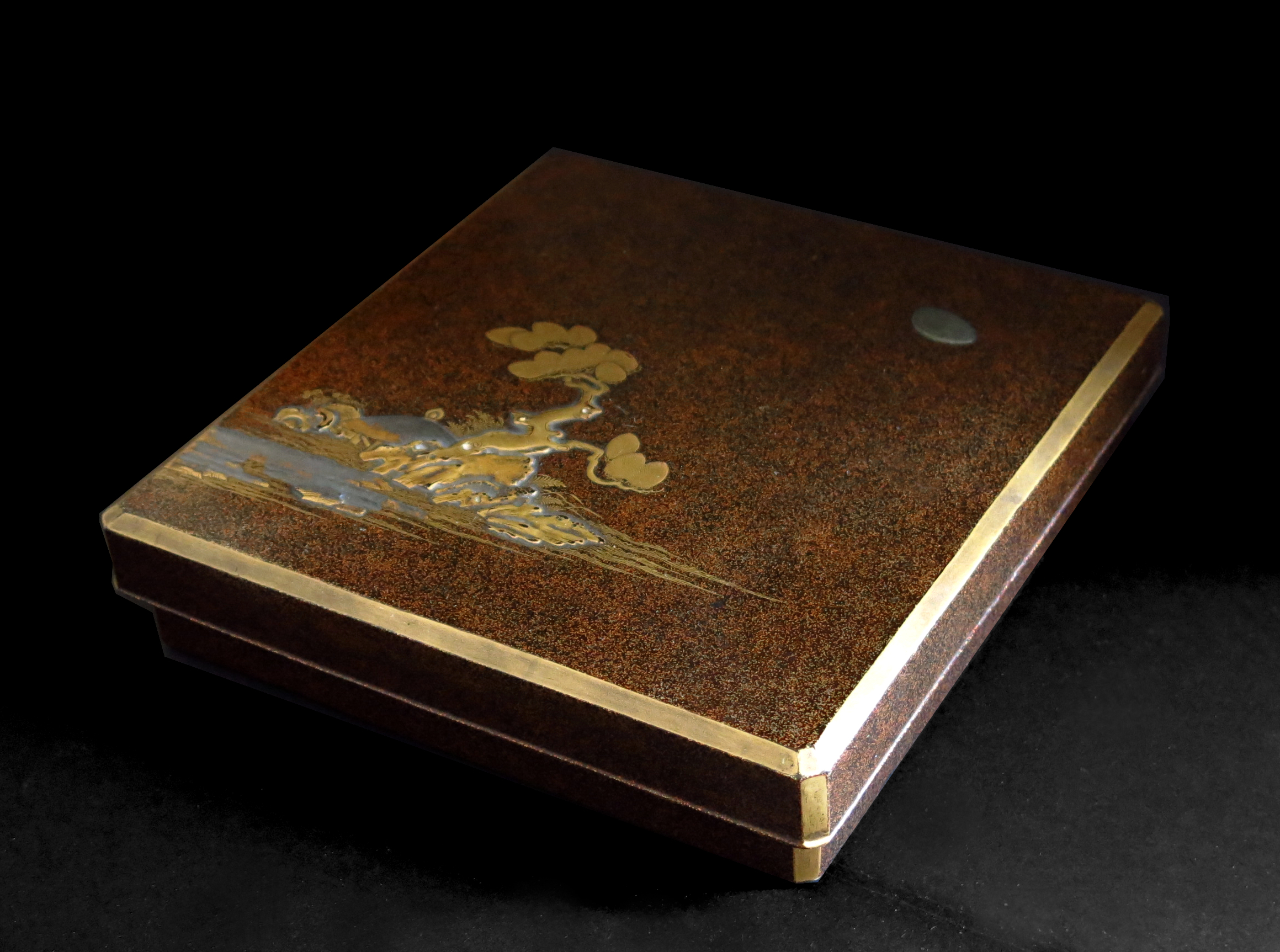


SUZURIBAKO – Coffret – écritoire en bois et laque du Japon urushi. Décor en Takamaki-e, Hiramaki-e et Kirigene, d’un paysage de pin à l’or et lune. Non signé. Japon Edo (1603-1868) fin du XVIIe siècle, début du XVIIIe siècle. 22 x 21,5 cm.
SUZURIBAKO – Japanese urushi lacquer. Techniques of gold and silver Takamaki-e, showing a pine tree and a moon on a Nashiji backgroung. Very fine gold border. Takamaki-e, Hiramaki-e and Kirigane. Japan Edo (1603-1868) End of 17th century, early 18th century.
Netsuke – Kidomaru sous sa peau de bête


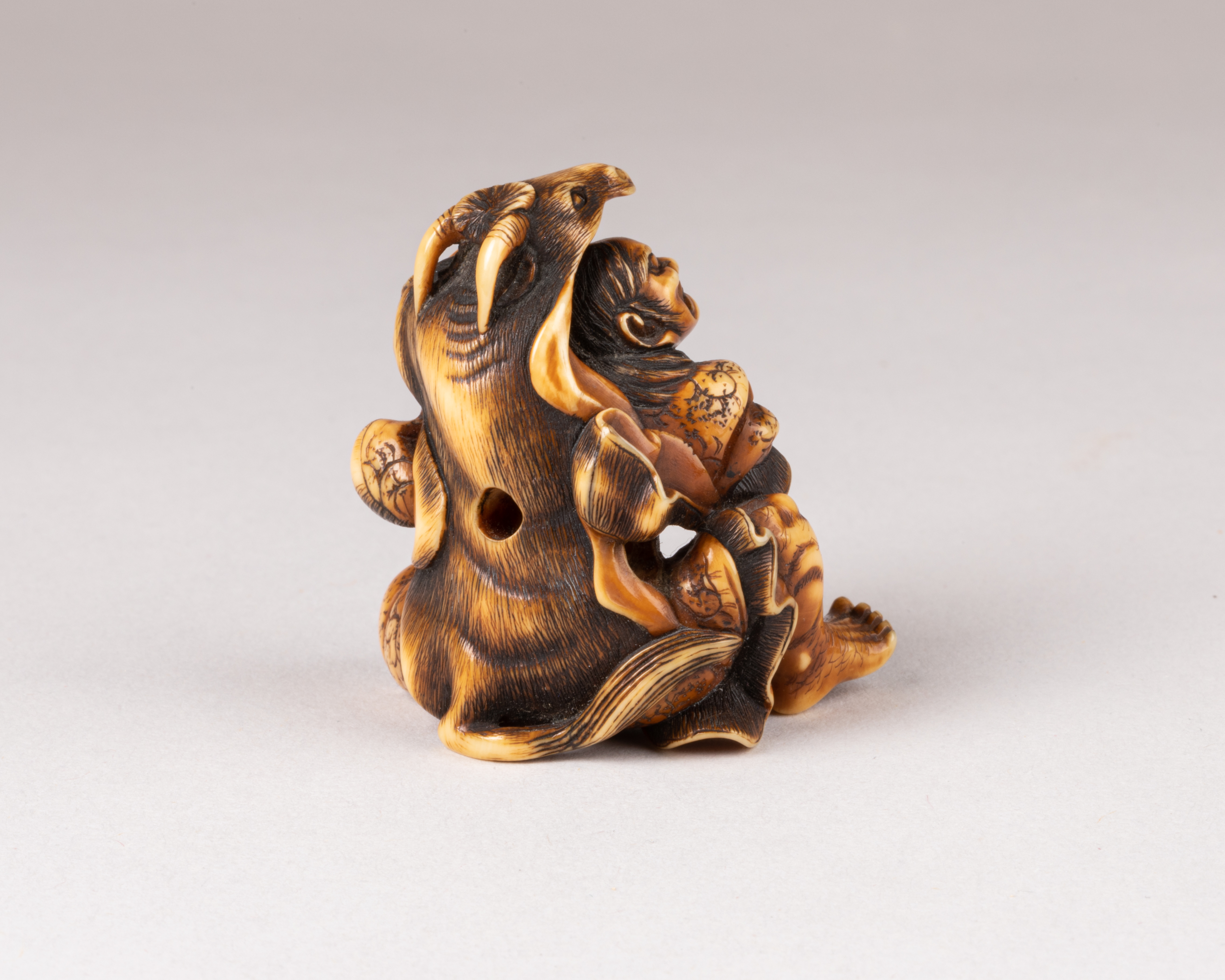


NETSUKE – Beau et rare modèle en ivoire sculpté, représentant Kidomaru, sabre à la main, sous sa peau de bête. Belle patine naturelle et très jolis détails de sculpture. Non signé. Hauteur : 3,8 cm. Japon Edo (1603-1868) XIXe siècle.
NETSUKE – Very fine and unusual model of Kidomaru carved on ivory, wearing and drawing his sword. Beaufiful patina and details of sculpture. Japan Edo (1603-1868) 19th century.