Menu
Estampe par Tsuchiya Koitsu (1870-1949) Etang Shinobazu dans le Sankei-en – jardin de Yokohama

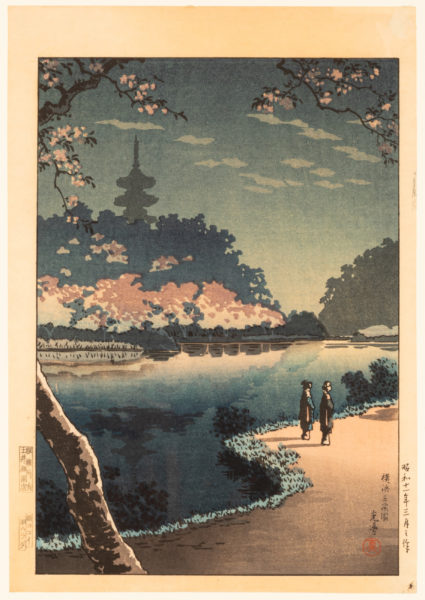
Estampe par Tsuchiya Koitsu (1870-1949). Ravissante composition offrant une vue du célèbre étang Shinobazu dans le Sankei-en – jardin de Yokohama. Deux femmes contemplant le paysage au bord de l’eau, apercevant le haut d’un temple s’élevant au-dessus des arbres, de cerisiers en fleurs teintés dans des tons de lilas à la tombée de la nuit. éditeur Doi Hangaten. Dimension Ogata-chuban, XXe siècle, vers 1940
Yokohama Sankei Garden (Shinobazu Pond) A lovely evening view of Shinobazu pond in the Yokohama Sankei Garden, with two beautiful women strolling along the shore. A temple spires rises above the tree tops across the water, the blossoming cherry trees below tinted in shades of lilac as the evening falls. Originally published in 1936, this print likely dates immediately following the War (as opposed to a later Doi-restrike). Born in 1879 in rural Japan with the given name Koichi. He became a student of the ukiyo-e master Kiyochika Kobayashi (1847-1915) after starting an apprenticeship for a woodblock carver who worked for Kobayashi. From 1931 on, Tsuchiya Koitsu became one of the artists working for the publisher Watanabe in the shin hanga style. His style is reminiscent of the works of his master Kobayashi and of the famous shin hanga artists Kawase Hasui and Hiroshi Yoshida. Publisher : Doi Hangaten Ogata-chuban Around 1940
Estampe : Shiro Kasamatsu (1898-1991) – Brume du soir sur l’étang Shinobazu

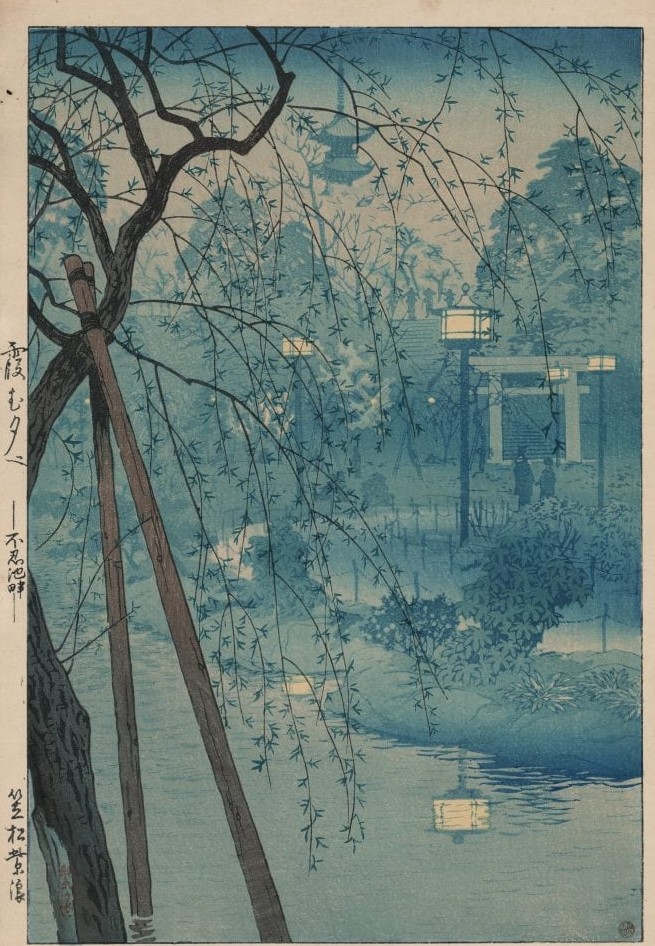
Shiro Kasamatsu (1898-1991) – Brume du soir sur l’étang Shinobazu L’étang Shinobazu est une pièce d’eau dans le parc d’Ueno de Tokyo. Le parc se trouve à l’emplacement du temple Kan’ei-ji, temple associé aux shoguns Tokugawa et détruit à la révolution de Meiji en 1868. L’étang Shinobazu est un endroit très célèbre de Tokyo et figure dans de nombreuses œuvres d’art dont de multiples estampes. 20e siècle, impression originale en 1932 – Impression de l’oeuvre : 1940s-1950s Format Oban.
Shiro Kasamatsu (1898-1991), Hazy Evening at the Edge of Shinobazu Pond A breathtakingly delicate woodblock print “Kasumu Yube, Shinobazu Chihan” (Misty Evening at Shinobazu Pond) by Shiro Kasamatsu. Very soft and subtle spring image. Superbly elegant composition. Title “霞む夕べ”(Kasumu Yube), subtitle “不忍池畔” (Shinobazu Chihan), and artist name “笠松紫浪”(Kasamatsu Shiro) on the left margin. This is a later printing (1946-1957) as denoted by the Watanabe 6mm seal (1946-1957) on the lower-left corner of the image. Shiro was born in Tokyo in 1898, and was apprenticed at the age of 13 to Kaburagi Kiyokata (1878–1973), a traditional master of bijin-ga. Kasamatsu however took an interest in landscape and was given the pseudonym “Shiro” by his teacher.

Netsuke – Momotaro dans sa pêche

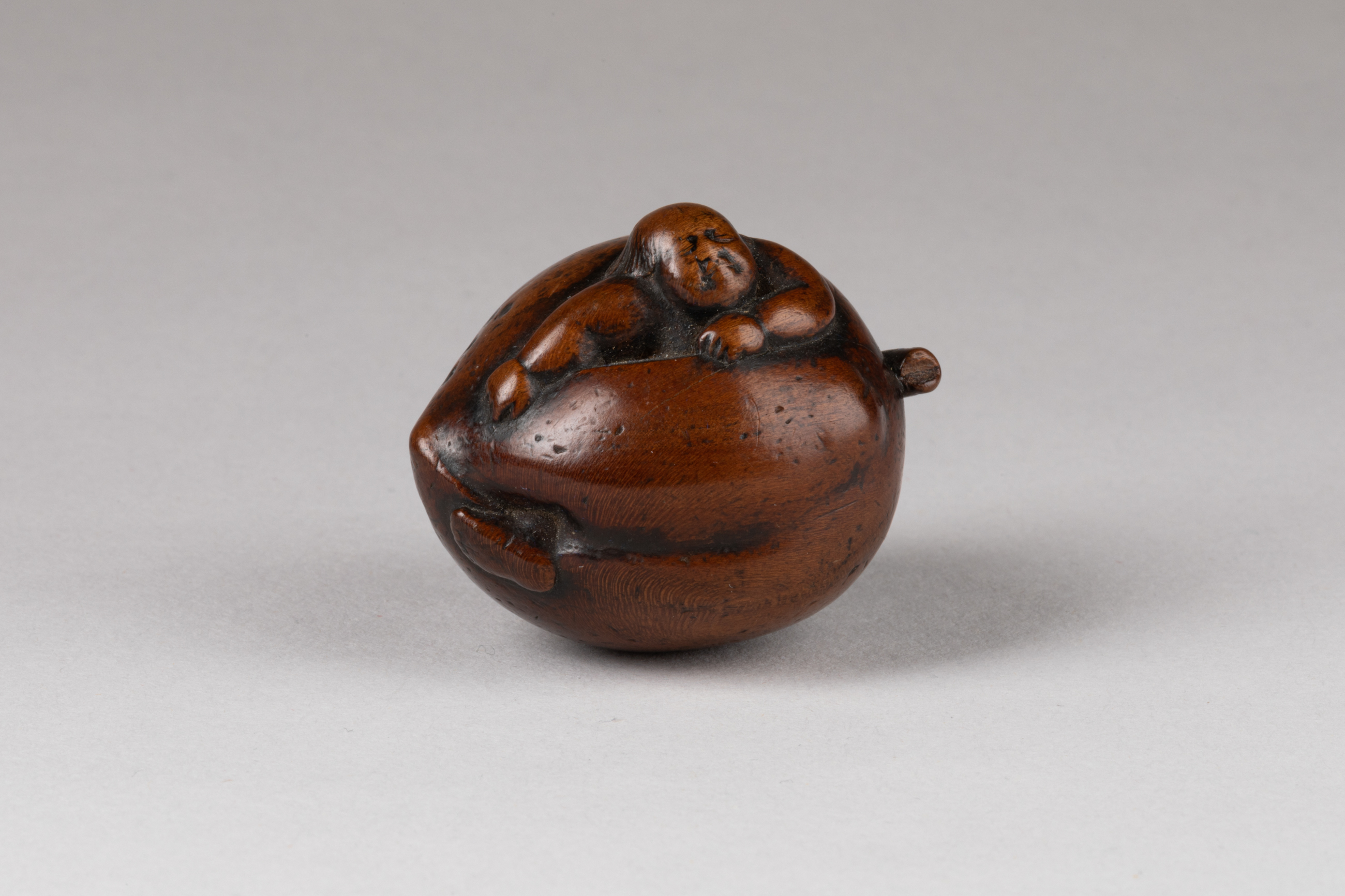


Netsuke – Joli netsuke en buis sculpté représentant Momotaro, petit personnage sorti du folklore japonais. Momo signifie pêche (le fruit) en japonais alors que Taro est un prénom masculin populaire dans l’archipel, en l’occurrence le nom de premier fils de la famille. Japon Edo (1603-1868) début du XIXe siècle. Longueur : 4 cm. Sa légende, très connue, est la suivante : Momotaro est né dans une pêche. Il fut découvert par une dame âgée qui lavait son linge dans une rivière. Elle le ramena chez elle et adopta le jeune Momotaro. Celui-ci leur annonça alors que les dieux des cieux l’avaient envoyé pour devenir leur fils. Un jour qu’il était parti chercher du petit bois, voici que Momotaro s’en revint avec l’arbre tout entier ! Le seigneur impressionné lui demanda de quitter famille et maison afin de combattre pour lui des démons ayant élus domicile sur l’île d’Onigashima. Le jeune Momotaro se mit en route. Chemin faisant, il rencontre trois créatures avec lesquelles il deviendra ami : un chien, un singe et un faisan. Ensemble ils parviendront à gagner cette bataille. Après cette victoire, Momotaro et ses compères retournèrent chez les parents adoptifs du garçon, les poches pleines des richesses subtilisées aux démons vaincus.
Netsuke – A godd wood model of Momotaro, (桃太郎, « Peach Boy ») is a popular hero of japanese folklore. His name translates as Peach Taro, a common Japanese name, and is often translated as Peach Boy. Momotarō was born from a giant peach, which was found floating down a river by an old, childless woman who was washing clothes there. The child explained that he had been bestowed by the Gods to be their son. The couple named him Momotarō, from momo (peach) and tarō (eldest son in the family). Length : 4 cm. Japan Edo (1603-1868) 19th century
Netsuke – Cailles sur du millet par Hiromitsu

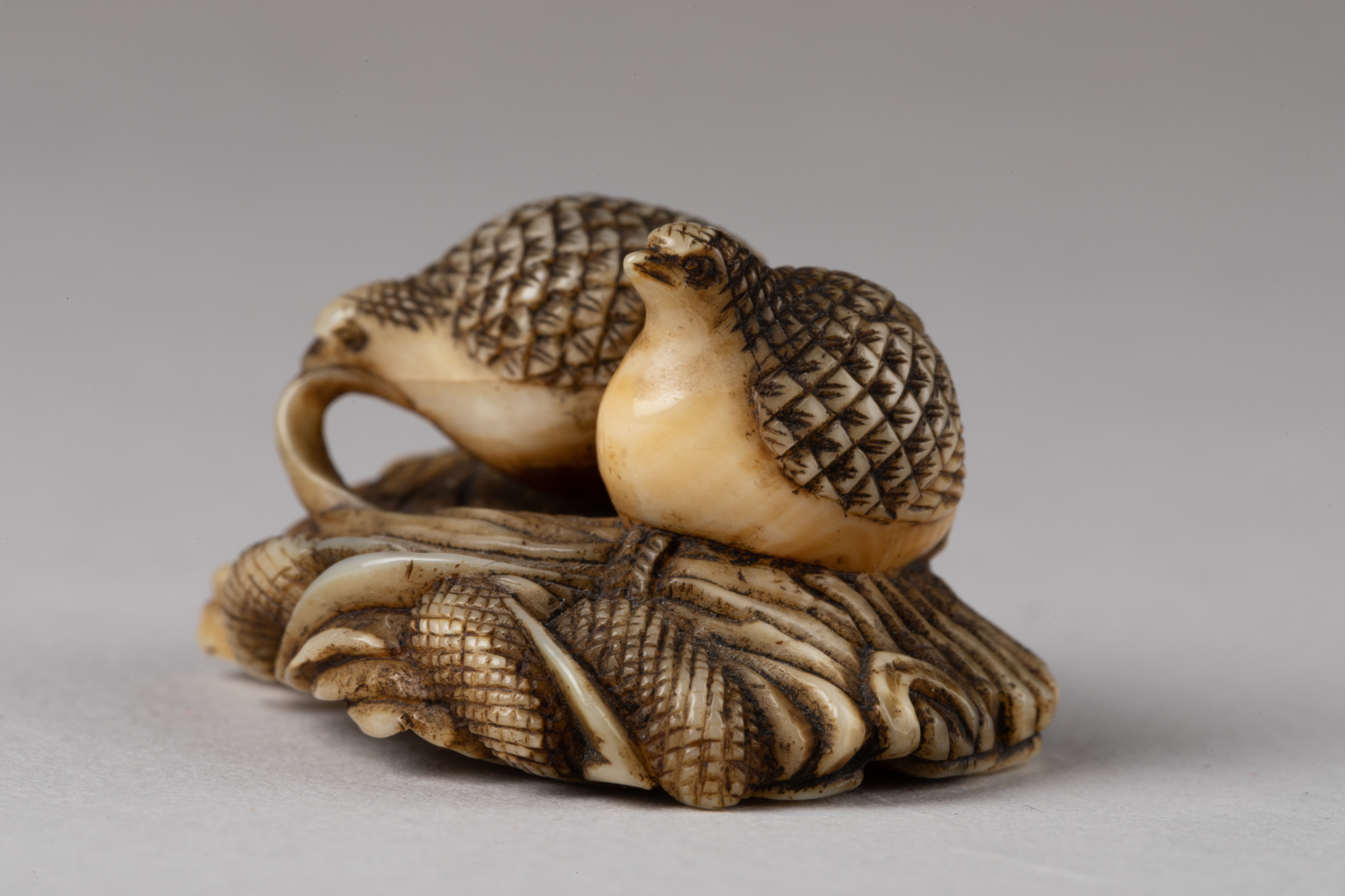


Netsuke – Ravissant petit modèle en ivoire marin rehaussé de patine brune, figurant deux ravissantes petites cailles sur une gerbe de millet. Signé dans un cartouche en nacre sous la base. Les cailles souvent représentées en groupe dans les champs de millets, shigi to awa, forment une allusion à Fukakusa non loin de Kyoto.
Netsuke – A small, good and unusual model of marine ivory with brown highlights, showing two quails on a sheaf of millet. Signed Hiromitsu in a mother-of-pearl cartouche under the base. The quails often represented in groups in the millet fields, shigi to awa, form an allusion to Fukakusa not far from Kyoto.
Netsuke – Tanuki écrasant un chasseur de son scrotum

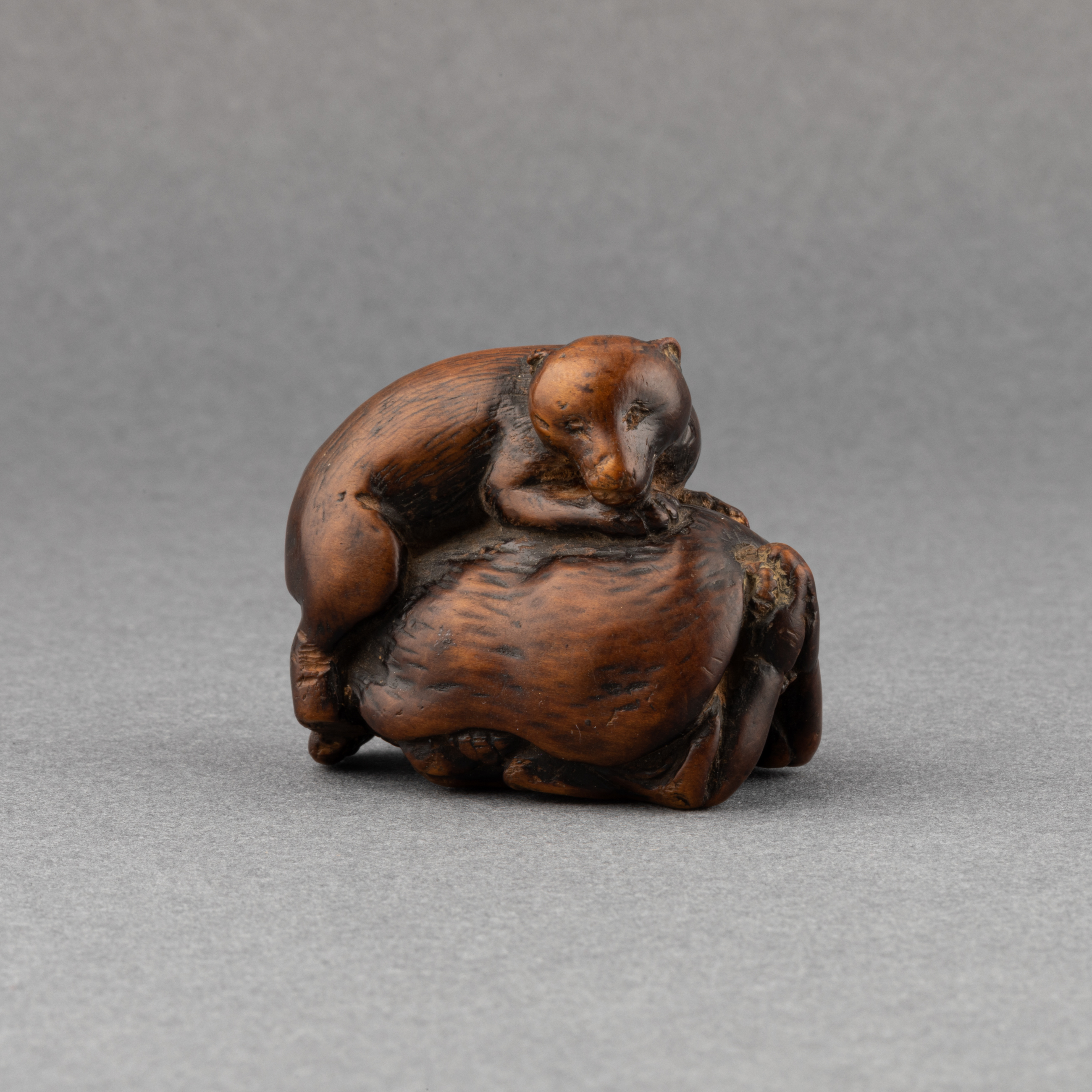


Netsuke – Ravissant et ancien modèle représentant la légende du tanuki, créature aux pouvoirs magiques, allongé, hostile aux chasseurs, l’ écrasant ici d’un d’entre eux portant des scandales, le suppliant les mains jointes de le relâcher, presque étouffé par l’énorme scrotum. Belle finesse de sculpture, jolie patine naturelle du bois. Himotoshi naturels formés par les jambes du chasseurs sous la base. Hauteur : 3,8 cm Longueur : 5 cm Époque Edo XVIIIe siècle.
Netsuke – A screaming hunter wearing his typical headgear is smothered by the huge distended veiny scrotum of a magical shapeshifting creature tanuki especially hostile to hunters, the badger liying on top, the underside carefully carved with the hunter crushed, pleading. An old netsuke very finely carved with a beautiful patina. Natural himotoshi under the base.
Netsuke – Groupe de châtaignes en bois sculpté

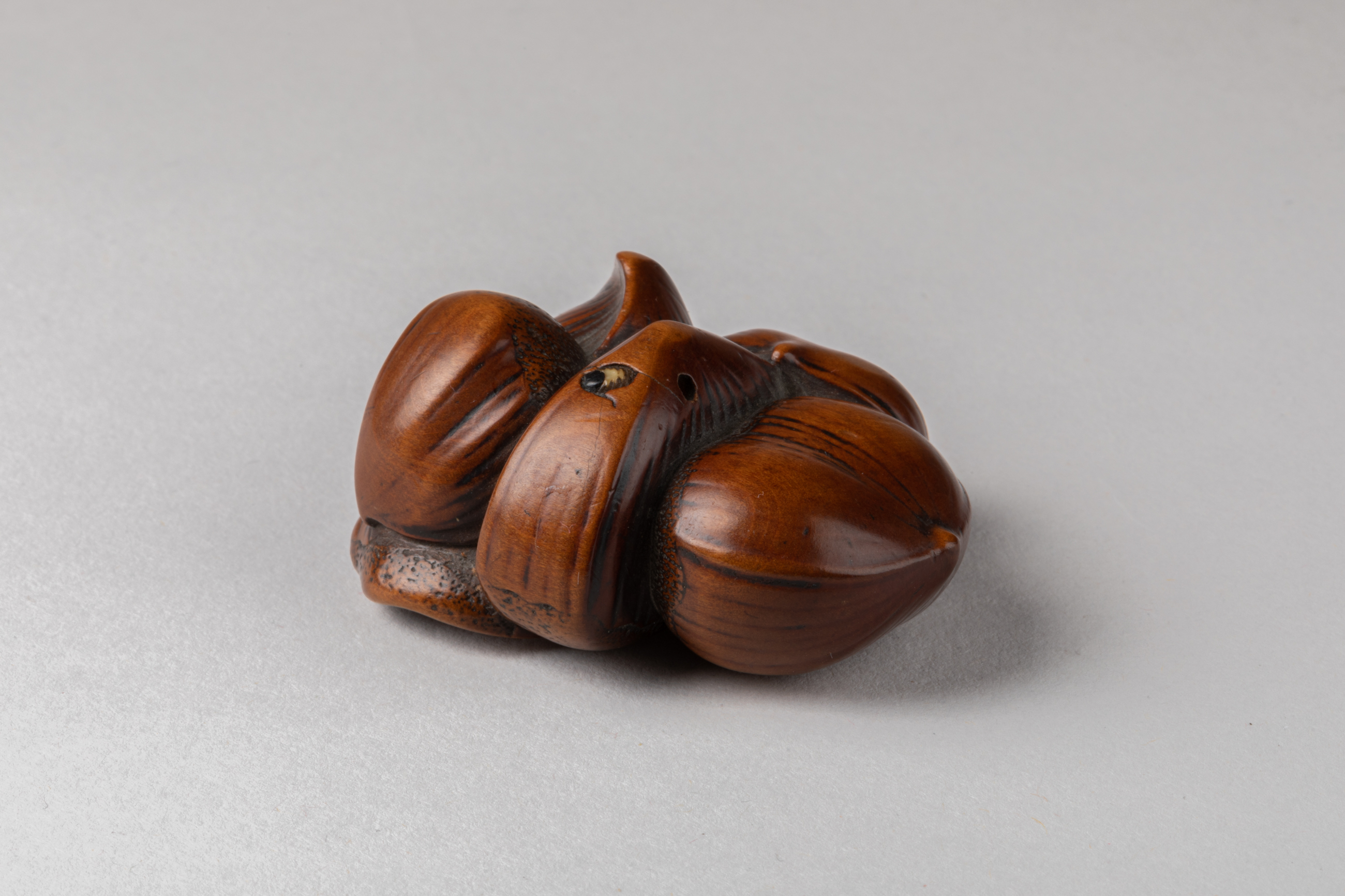


Netsuke – Charmant modèle d’un groupe de plusieurs châtaignes accolées en buis sculpté, dont l’une d’elles laisse apercevoir le passage d’un petit ver, en os sculpté. La couleur naturelle de la châtaigne et l’usure du bois offre une représentation très naturaliste. Larges himotoshi à l’arrière. Belle patine naturelle. Jolie finesse de sculpture. Probablement ancienne collection Carlo Monzino, n°191 vendu chez Sothebys Londres en 1995. Dimensions : 5 cm Epoque Edo fin du XVIIIe siècle
Netsuke – A lovely model of boxwood group of chestnuts with a small worm passing through a hole of one of them. The colour and makings of the wood used to fullest advantage to give a very realistic looking appearance. Finely carved with delicate work and a beautiful natural patina. Probably the old collection Carlo Monzino, n°191 sold at Sotheby’s London in 1995. Edo era, end of 18th century
Netsuke – Tanuki no Hara Tsutsumi

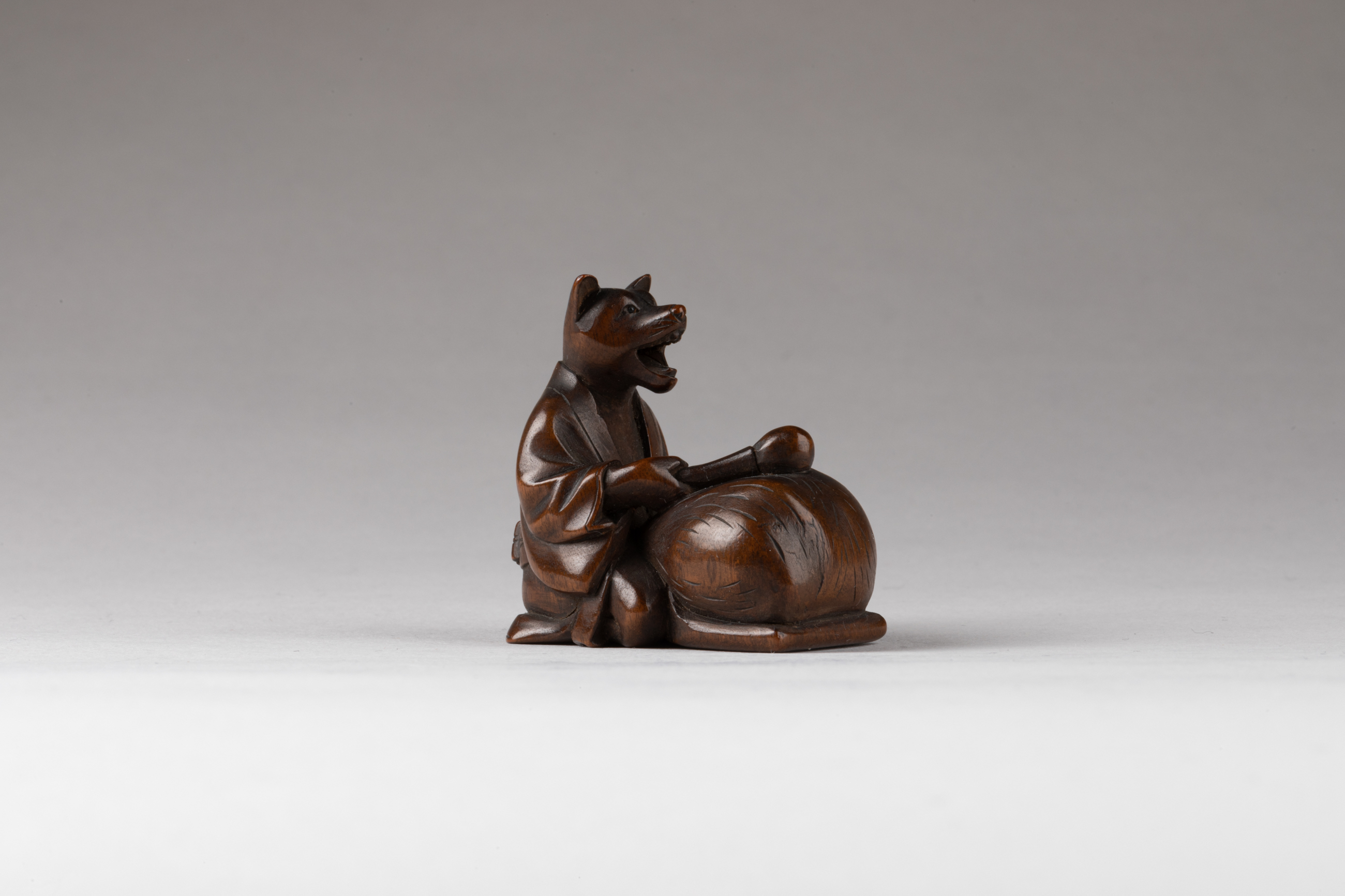


Netsuke en bois représentant un blaireau – tanuki, terme japonais habituellement utilisé pour désigner le chien viverrin vêtu d’un kimono, habillé en moine, tenant une baguette de tambour dans sa main droite, s’apprêtant à battre son scrotum qui repose sur un coussin, comme s’il s’agissait d’un mokugyo. Belle finesse de sculpture. Un exemplaire similaire au Metropolitan Museum.
A finely carved wood netsuke of a sitting tanuki dressed as a buddist priest, wearing a kimono, with a striker on his right hand, getting ready to beat his huge scrotum, that is resting on a cushion as if it were a mokugyo, in front of him. A similar exemple in the Metropolitan Museum.
Netsuke – Jeux de Hagoita et Buri-buri

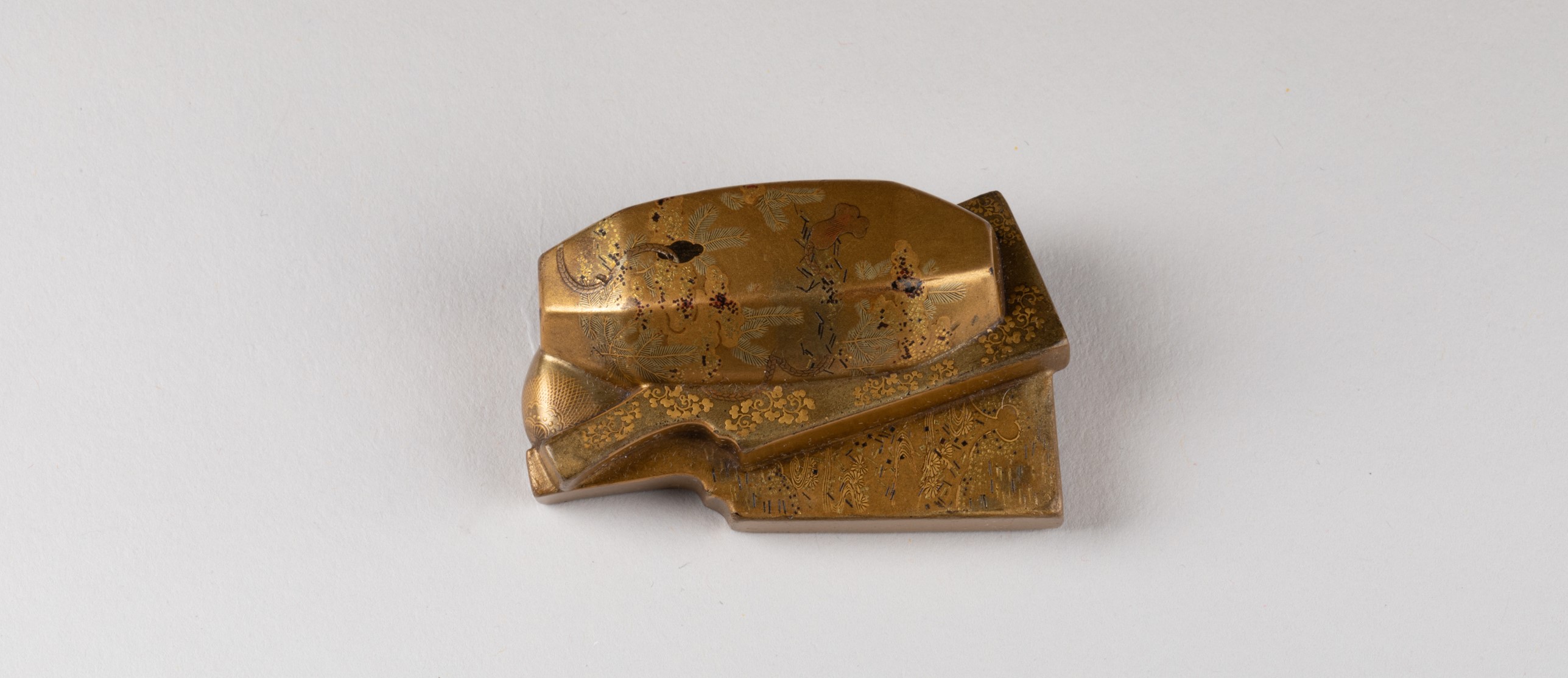


Netsuke – Grand modèle en laque d’or, représentant des raquettes en bois Hagoita et un Buri-buri. Tradition ancienne, toujours présente aujourd’hui, les Hagoita étaient utilisées pour jouer au Hanetsuki, jeu traditionnel du Nouvel An. Longueur : 5,8 cm. Japon Edo (1603-1868) vers 1820, XIXe siècle
Netsuke – A good and big model of a Japanese gold lacquer netsuke representing Hagoita paddles and a Buri buri strike. Old traditional game, there were used during the new year. Japan Edo (1603-1868) 19th century, around 1820.
Netsuke – Crapaud en buis sculpté

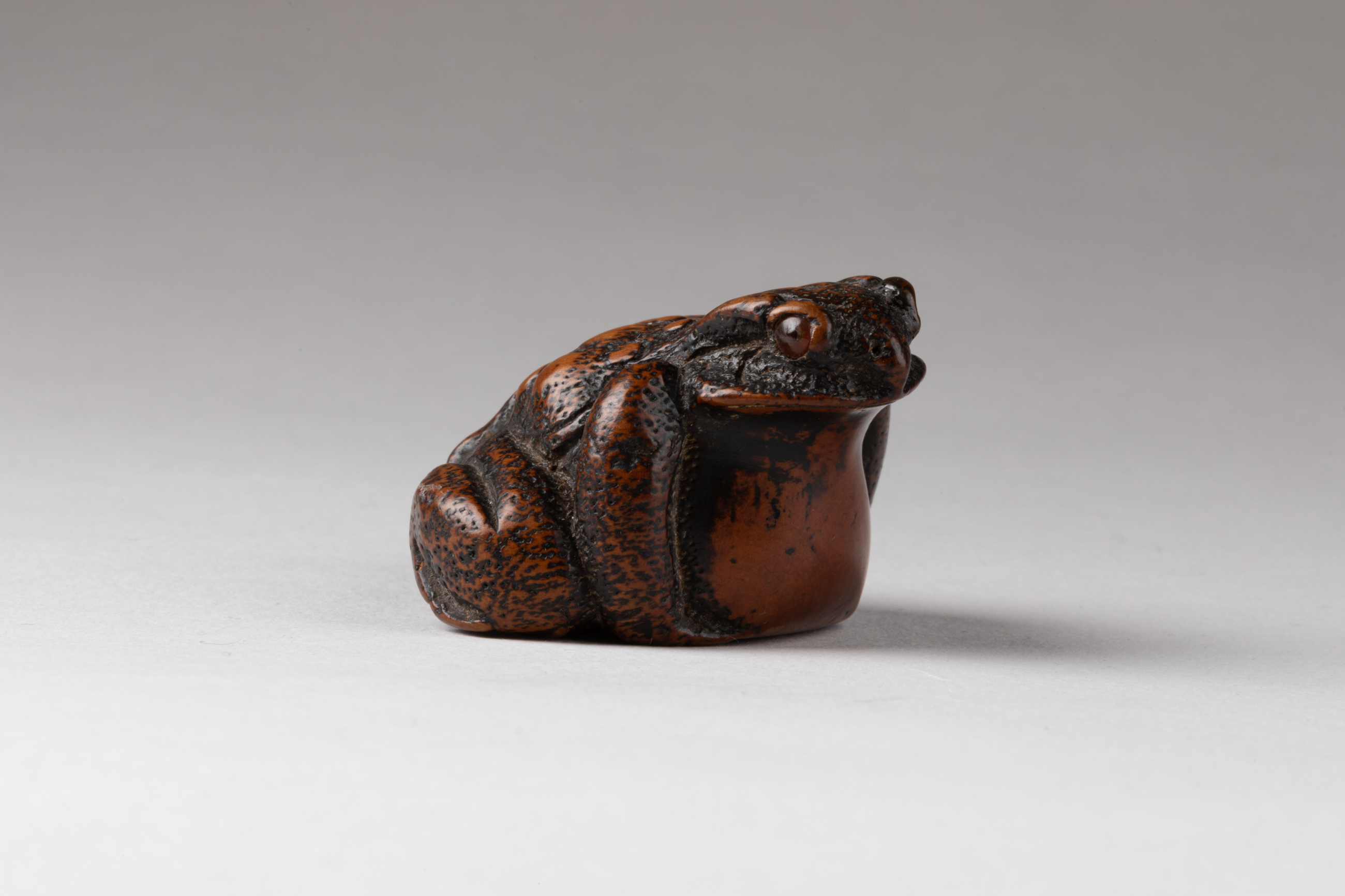


Netsuke – Ravissant modèle, de belle dimension, représentant un crapaud en position accroupie, sur le point de sauter, ses pattes repliées sous son ventre. Ses yeux sont incrustés de corne brune. Bonne expression. Belle finesse de sculpture et jolie patine naturelle du bois. Hauteur : 3 cm x Longueur : 4,7 cm. Époque Edo XVIIIe siècle.
Netsuke – A good and stong model of a toad squatting in the usual position as if about to leap, the body well carved, with its feet folded beneath and its knobbly skin. the eyes inlaid with brown horn. Nice color with a beautiful patina.
Netsuke – Chiot sur un coquillage Awabi

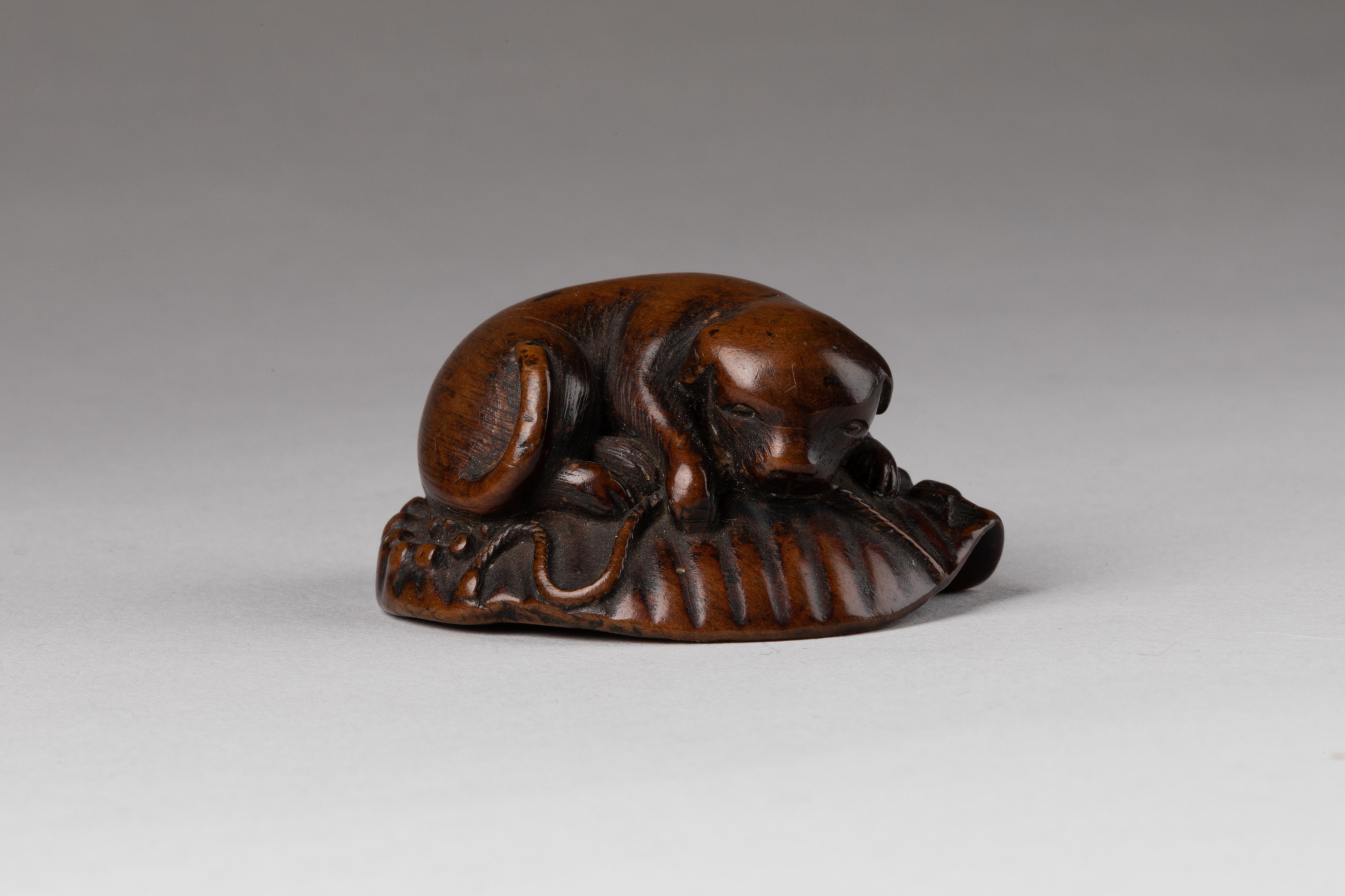


Netsuke – Un joli modèle de sculpture, d’un chiot sur un coquillage « Awabi ». Le jeune chien est allongé sur le coquillage, attrapant dans sa gueule une corde attachée au coquillage. Belle couleur du bois. Longueur : 4,6 cm. Japon Edo (1603-1868) XIXe siècle.
Netsuke – A wood study of a puppy on a Awabi shell. The young dog recumbent with its body twisted to the right, as he holds a long cord attached to the shell, the wood slightly worn of a good color. Lentgh : 4,6 cm. Japan Edo (1603-1868) 19th century.
Netsuke – Joli modèle d’un crapaud sur une sandale – Masanao

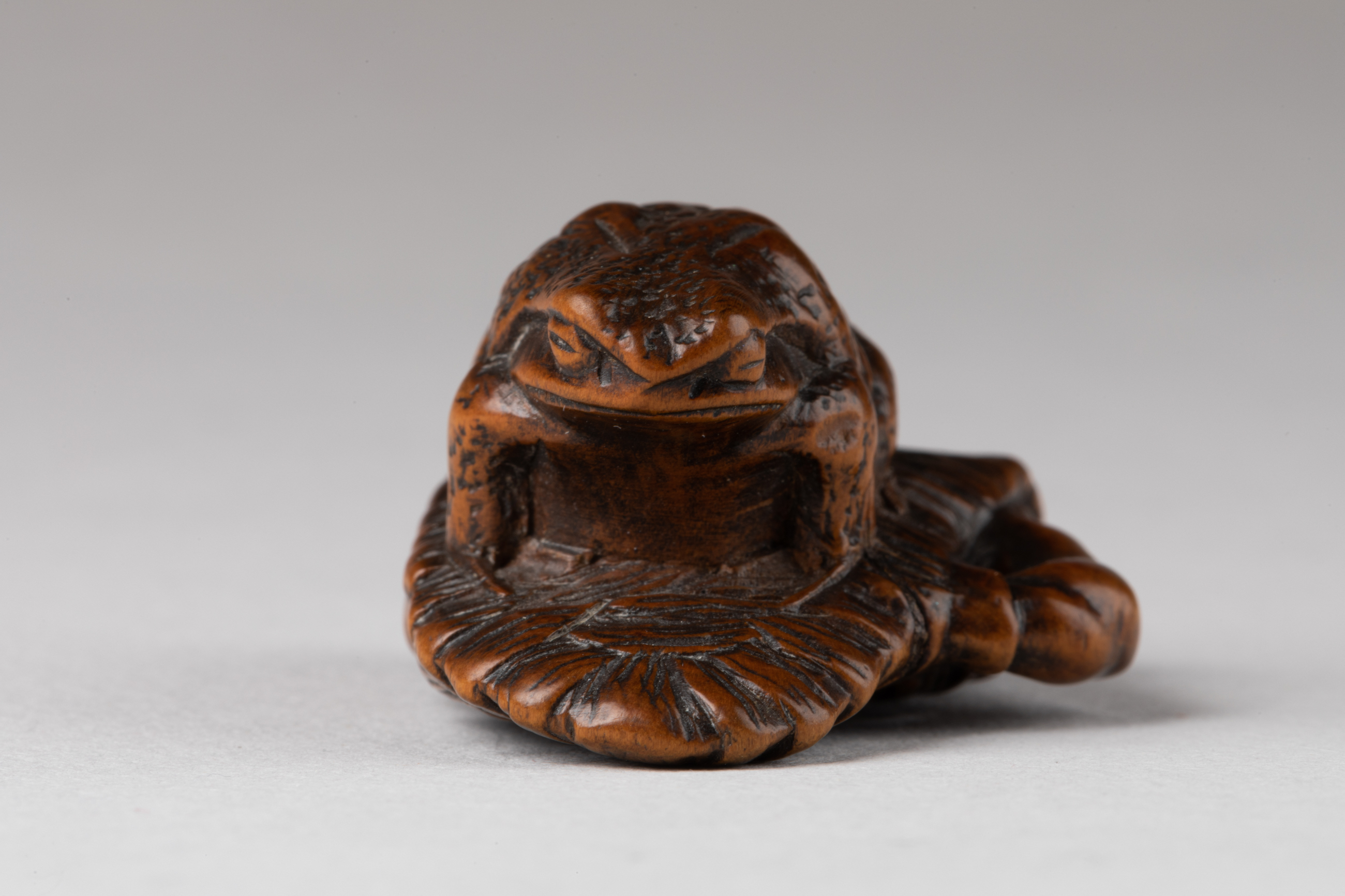


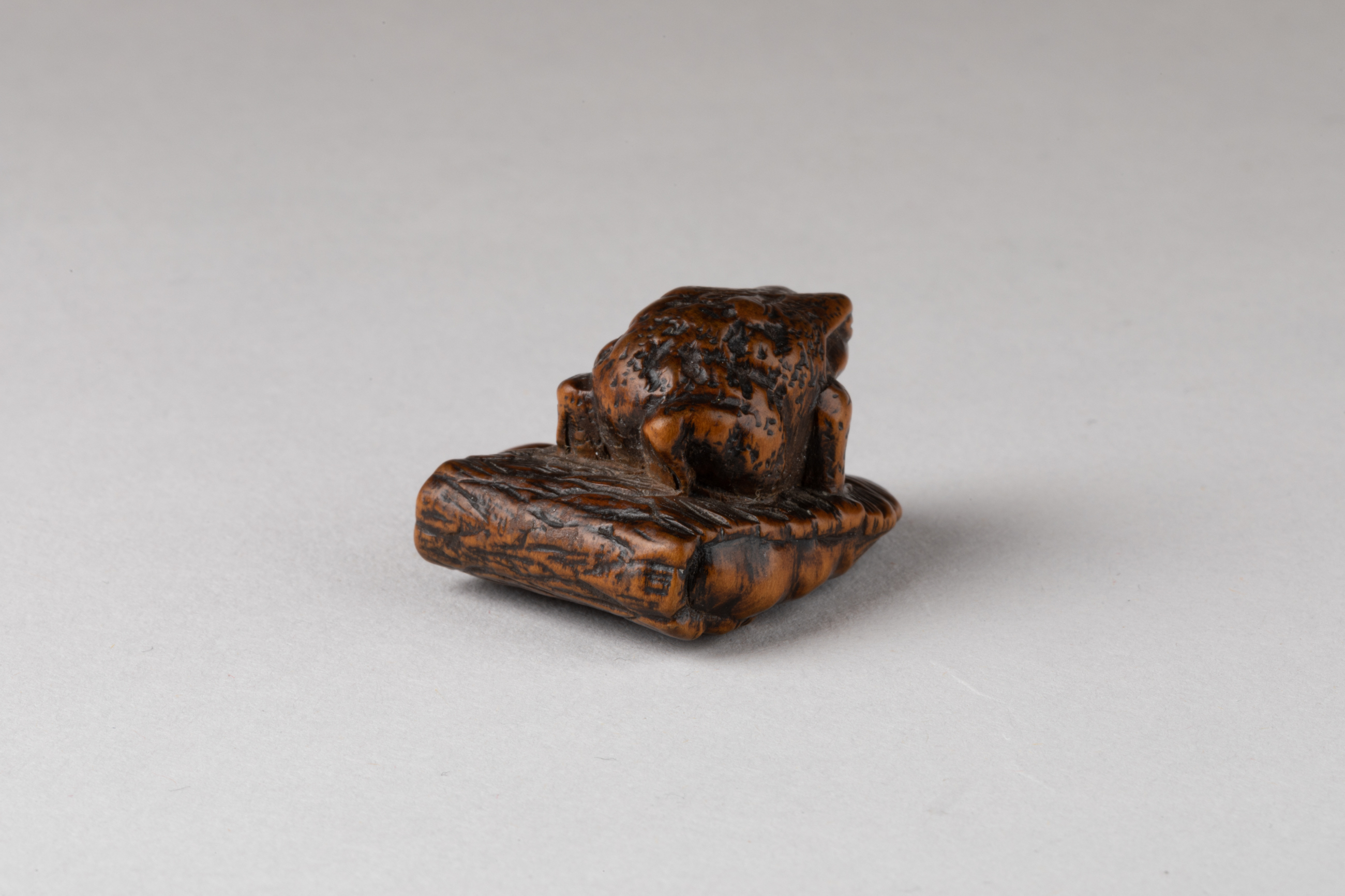


Netsuke – Joli petit modèle en bois sculpté d’un crapaud, assis sur une Waraji abandonnée (sandale en paille), ses pattes arrières fléchies et sa tête légèrement relevée alors qu’il se prépare à sauter, la lanière de la sandale forme l’Himotoshi. Belle patine naturelle teintée de noir. Signé sous la base sur une réserve : Masanao (de Yamada). Longueur : 3,2 cm. Japon Edo (1603-1868) XIXe siècle.
Netsuke – A wood modele of a toad, seated on a discarded Waraji (straw sandal), its hind leg flexed and its head raised as it prepares to leap, the thong of the sandal forming the Himotoshi. Beautiful and natural patina, the wood dark-stained. Signed under the base on a reserve : Masanao (of Yamada). Lentgh : 3,2 cm. Japan Edo (1603-1868) 19th century.
Petit modèle d’un lapin en bronze
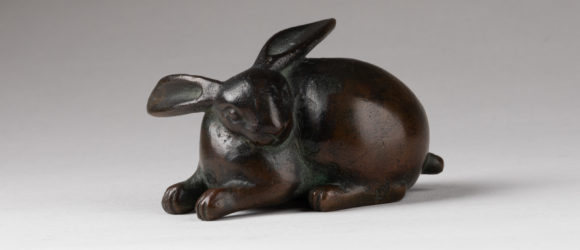
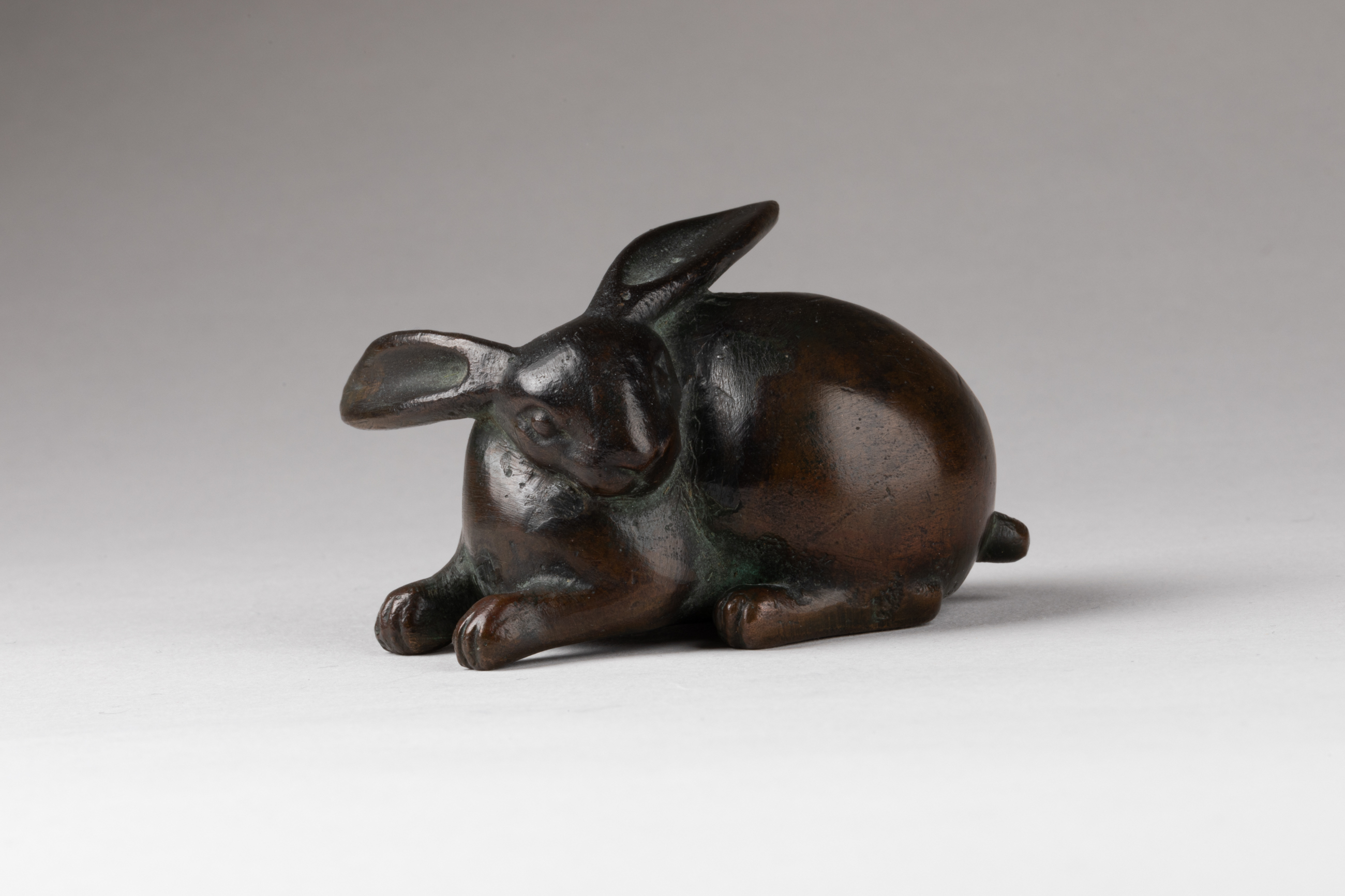


Bronze – Petit modèle en bronze Usagi, d’un lapin / lièvre couché, les oreilles en alerte légèrement redressées de part et d’autre. Ravissante patine brune. Petite taille assez inhabituelle. Longueur : 7 cm. Japon Edo (1603-1868) XIXe siècle. Selon la légende, le lapin atteint l’âge de 1000 ans et devient bleu à l’âge de 500 ans. Depuis la lune, il pile la pilule d’immortalité dans un mortier, et fabrique les « mochi » gâteaux de riz de la pleine lune.
Bronze – A very fine and unusual small modele of a recumbent hare. Beautiful patina slightly dark. Length : 7 cm. Japan Edo (1603-1868) 19th century. In the japanese legend, the lunar hare is mixing the elixir of life with a pestle in a large mortar.
Netsuke – Renard en bois, déguisé en prêtre

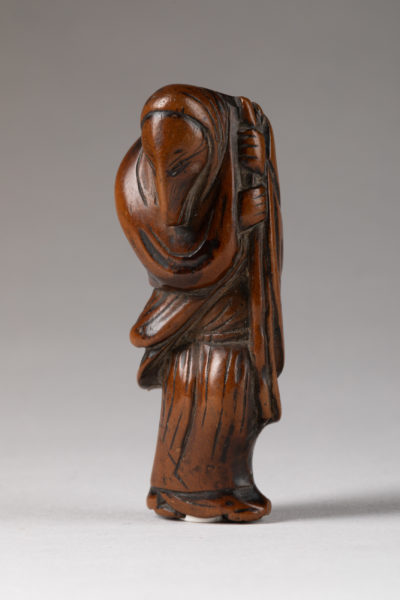


Netsuke – Rare et élégant sujet représentant un renard déguisé en prêtre, selon la légende japonaise qui s’y rapporte. Il porte une longue robe et un manteau lui couvrant la tête. Il tient un bâton dans ses mains. Hauteur : 5,6 cm. Japon Edo (1603-1868) XVIIIe siècle.
Netsuke – A rare and elegant modele of a boxwood fox disguised as a priest. Its holding a stick, wearing a long dress and a larg coat covering his head. Height : 5,6 cm. Japan Edo (1603-1868) 18th century
Inro – Chat et pivoines
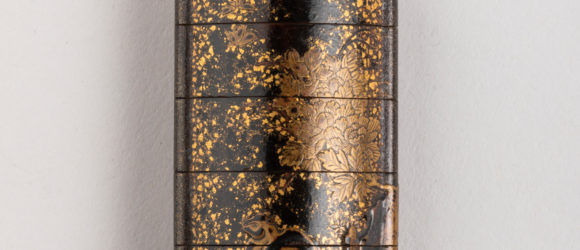


Inro – Petit modèle ouvrant par quatre cases et un couvercle, en laque à fond noir et or selon la technique Hirameiji avec un décor en maki-e représentant un chat couché sous un arbre de pivoines en fleurs avec papillons et rochers. Techniques de laques kimekomi, harigaki et tsukegaki. L’intérieur en laque nashiji. Hauteur : 7 cm. Japon Edo (1603-1868) XVIIIe siècle.
Inro – four-cases small model of an Inro, black and gold urushi lacquer with a Hirameiji background representing, with the technique of maki-e, a cat lying under a tree with blooming peonies , butterflies and rocks. Kimekomi, harigaki and tsukegaki lacquer techniques. Nashiji lacquer inside. Height : 7cm. Japan Edo (1603-1868) 18th century.
Kobako – Boîte en forme de personnage
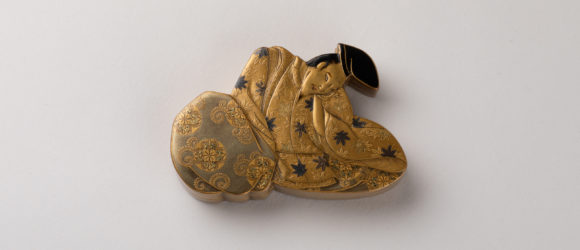
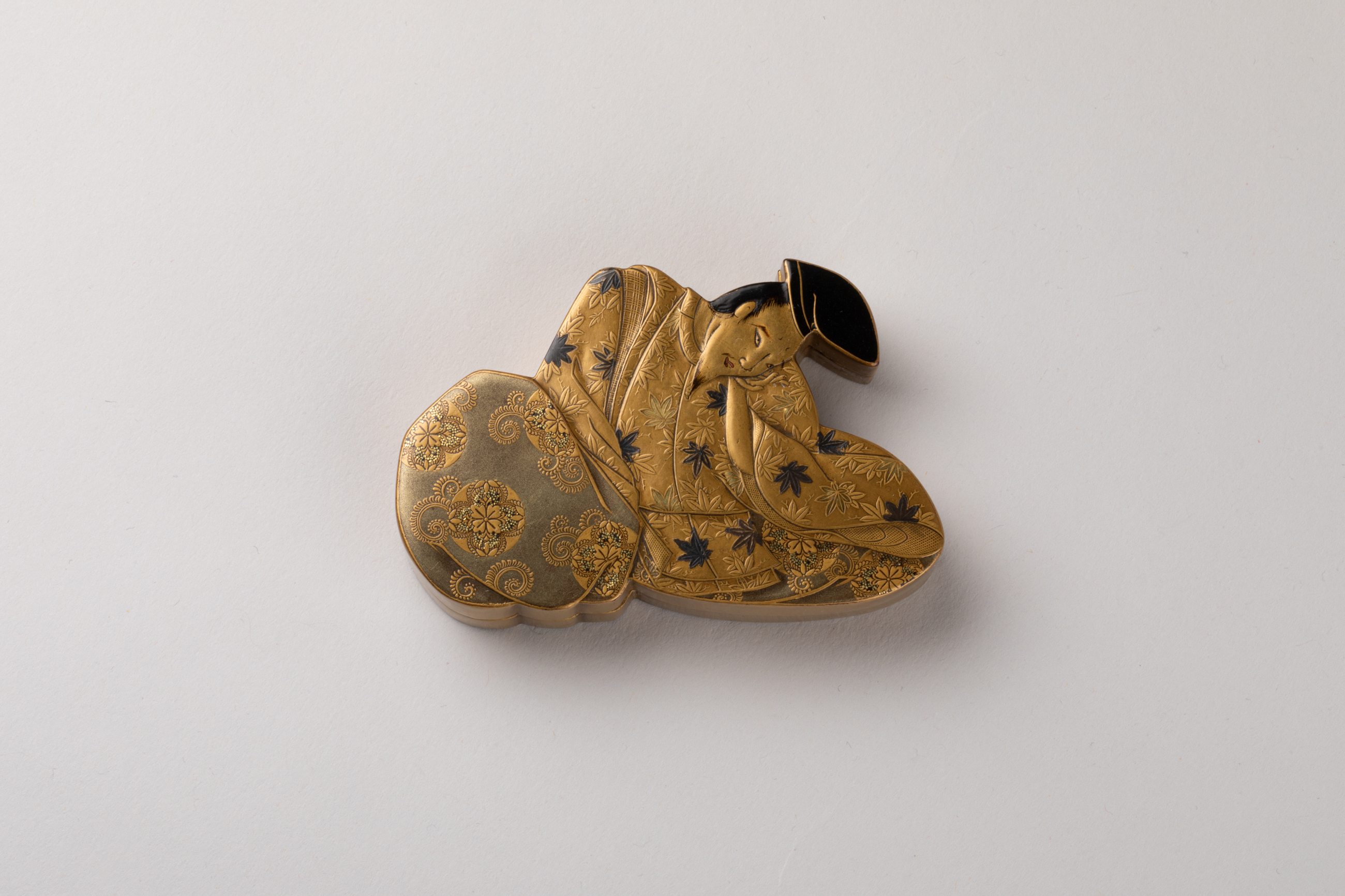


Kobako – Rare boîte en forme de personnage vêtu d’un costume et d’une coiffe, richement ornés, caractéristiques d’un dignitaire de l’époque Heian. La boîte ouvre par le couvercle, offrant un joli fond en laque nashiji. Dimensions : 8,5 cm x 5,5 cm x 2 cm. Japon fin Edo (1603-1868) XVIIIe siècle.
Kobako – Unusual and beautiful shape of a gold urushi lacquer box. An Heian era dignitary character with a beautiful dress and cap / hat. nashiji inside. 8,5 cm x 5,5 cm x 2 cm. Japan Edo (1603-1868) 18th century.
KOGO – Rare boîte en forme de daim couché

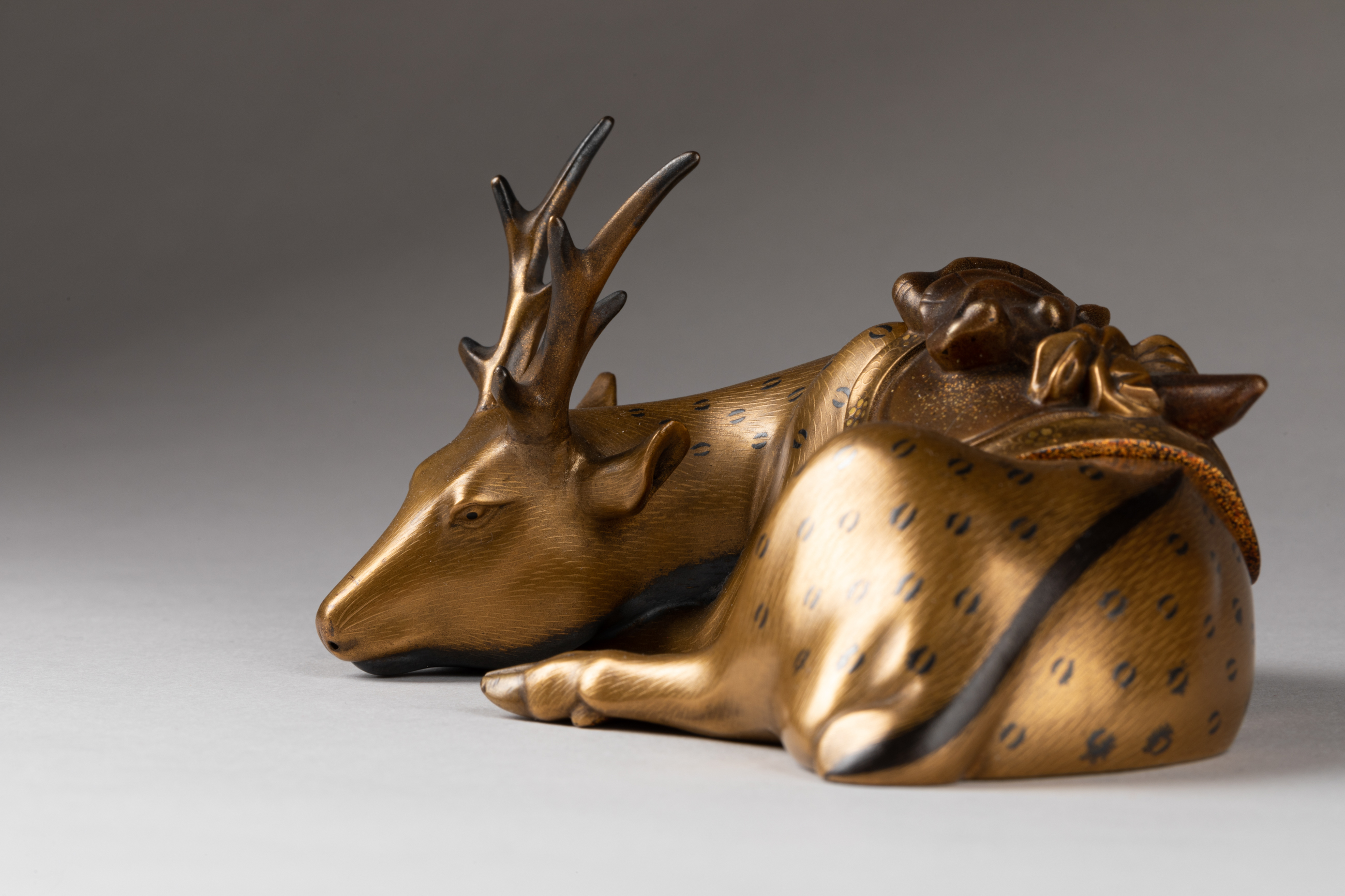


KOGO – BOÎTE À ENCENS EN LAQUE « DAIM ET REISHI ». Rare boîte en forme de daim couché, par un couvercle sur le dos de l’animal, orné d’une selle surmonté de champignons de longévité – Reishi dévoilant un récipient pour recevoir la poudre d’encens. Porte deux étiquettes anciennes sous la base. Techniques de laque : laque d’or en maki-e et laque d’argent sur fond d’or kin-fundame, les cornes de cerfs en laque hirameiji. H : 5,5 cm – L : 10,5 cm – l : 7,1 cm. Japon Edo, XVIIIe siècle.
KOGO – A LACQUER ‘STAG AND REISHI’ INCENSE BOX A box shaped as a crouching stag, its back opening by a lid topped by a ‘longevity fungus’ finial unveiling a container for incense powder. The below bears two labels, the one with a missing part inscribed with a calligraphy. Lacquer techniques: gold lacquer in maki-e and silver lacquer on kin-fundame gold background, the deer horns in hirameiji lacquer. H: 5,5 cm – L: 10,5 cm – w: 7,1 cm. Japan, Edo period, 18th century.

NETSUKE – Rare modèle de poupée en laque d’or
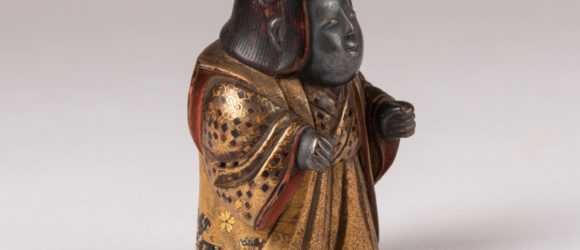
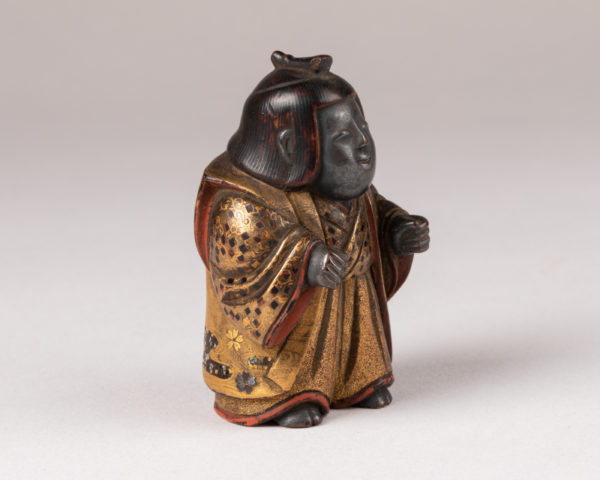


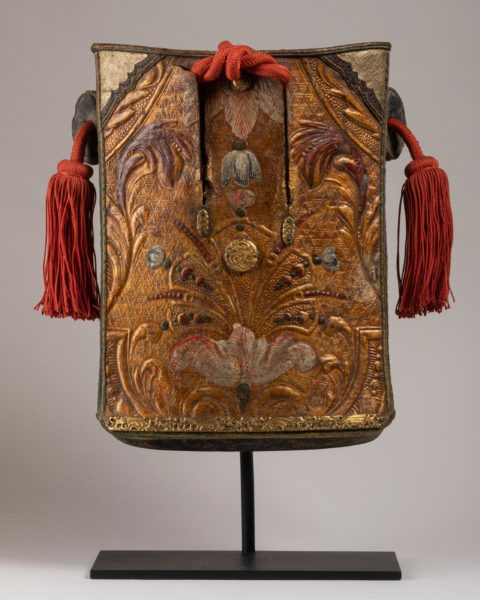
NETSUKE – Rare modèle de poupée en laque d’or et d’argent portant une large robe richement ornée avec des détails de fleurs de cerisier en nacre et en feuilles d’or. La forme suggère une poupée gosho ningyo, qui a servi de modèle. Techniques de laque : fond d’or kinji, laque d’or en maki-e, laque d’argent, kanagai, kirikane, nashiji. Non signé. Japon Edo (1603-1868) XVIIIe siècle. Hauteur : 5,4 cm.
NETSUKE – Small figure in urushi lacquer. Unusual model of a doll wearing large dress with details of flowers in mother-of-pearl and gold leaf. It suggests the gosho ningyo, which may have served as a model. Techniques of lacquer : golden background kinji, gold lacquer, silver lacquer, kanagai, kirikane, maki-e , nashiji. Unsigned. Japan Edo (1603-1868) 18th century. Height : 5,4 cm.